
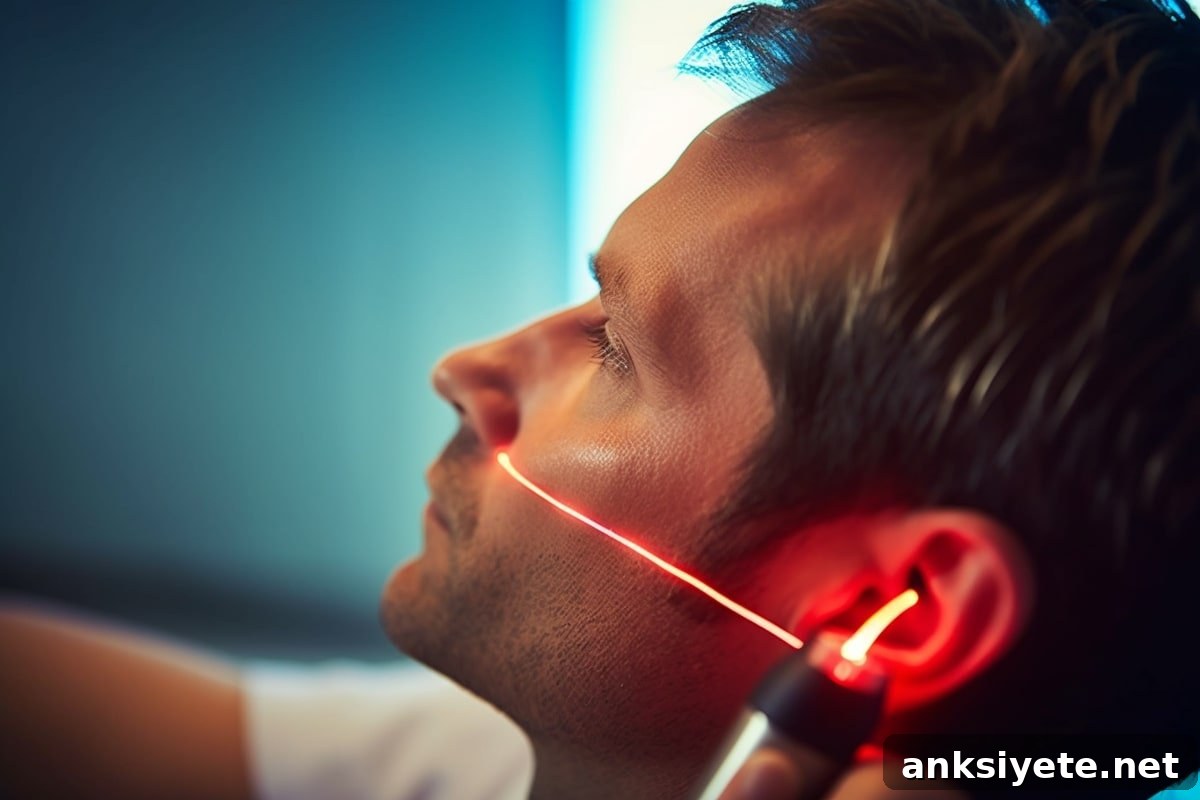
Summary: Researchers from the Optics and Photonics Research Center (CEPOF) in Brazil report that low-level laser therapy (LLLT), also called photobiomodulation, produced the most effective results among current treatments evaluated for tinnitus, a symptom that affects an estimated 750 million people worldwide.
The clinical trial found the strongest improvements with laser acupuncture and transmeatal low-power laser stimulation used alone. The authors propose that laser therapy may work by improving peripheral blood flow in the inner ear, encouraging inner ear cell proliferation, and supporting collagen production—mechanisms that could explain its benefit for many tinnitus patients.
Key Facts:
- Tinnitus—commonly experienced as ringing, buzzing, or hissing in the ears—affects roughly 750 million people globally and currently has no FDA-approved standard drug treatment.
- Low-level laser therapy modalities, including laser acupuncture and transmeatal low-power laser stimulation, produced superior clinical outcomes in the study compared with many other therapies tested.
- The researchers observed possible mechanisms for improvement such as enhanced peripheral irrigation of the inner ear and stimulation of inner ear cell and collagen production, which may underlie LLLT’s therapeutic effects.
Source: FAPESP
This randomized, double-blind clinical study is reported in the Journal of Personalized Medicine and was led by researchers at CEPOF. The work addresses a pressing clinical need: despite its prevalence and the serious impact it can have on quality of life, tinnitus lacks consistent, effective, and widely approved treatments. The new results add evidence supporting LLLT as a promising non-pharmacological option.
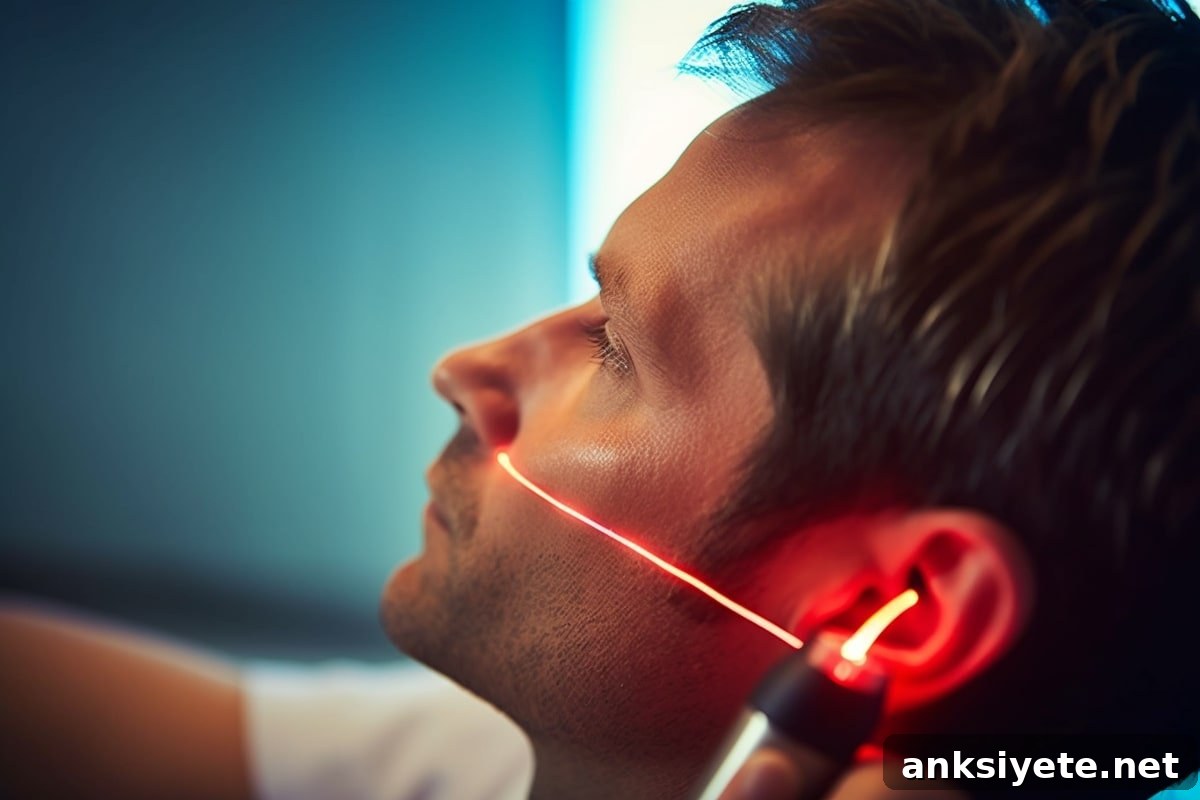
Tinnitus has many possible contributors—from earwax buildup and reduced inner ear blood flow to neurological injury and jaw clenching (bruxism). Because it is a symptom rather than a single disease entity, clinicians have tried a wide range of interventions, including ear irrigation, various medications and supplements, psychological therapies, and physical modalities, with inconsistent results.
In this trial, CEPOF researchers recruited more than 100 adults aged 18–65 with idiopathic or refractory tinnitus and randomized them into ten treatment groups. Over four weeks, participants received eight treatment sessions (twice weekly) and were evaluated before treatment, immediately after the eighth session, and again two weeks later. Outcomes were measured using the Tinnitus Handicap Inventory (THI), including a functional subscale that assesses mental, social, occupational, and physical limitations related to tinnitus.
The study compared several approaches: laser acupuncture, the drug flunarizine dihydrochloride, Ginkgo biloba, transmeatal low-level laser stimulation of the internal auditory canal or meatus (both alone and combined with vacuum therapy, ultrasound, Ginkgo biloba or flunarizine). Laser acupuncture and transmeatal LLLT alone produced the most consistent, clinically meaningful improvements. For transmeatal LLLT, increasing irradiation time from 6 minutes to 15 minutes (at 100 mW and 660 nm) improved outcomes further.
Some combined approaches yielded mixed short-term effects: when LLLT was paired with vacuum therapy, ultrasound, Ginkgo biloba, or flunarizine, the combination sometimes produced antagonistic short-term responses. However, certain combinations—LLLT with vacuum therapy or with Ginkgo biloba—and monotherapy with flunarizine also showed durable benefits at the two-week follow-up.
Lead researcher Vitor Hugo Panhóca notes that laser therapy’s observed benefits likely include anti-inflammatory effects and tissue relaxation, along with the potential to increase local circulation and stimulate inner ear cell activity and collagen synthesis. These biological effects may be particularly relevant when reduced peripheral irrigation is a contributing factor to tinnitus.
New protocols
The CEPOF trial helps establish a clearer comparative picture of existing non-pharmacological treatments and supports developing standardized LLLT protocols. Because published LLLT parameters (session number, irradiation time, power and wavelength) vary widely, this study’s findings—especially the dose-response seen when increasing irradiation time—are valuable for clinicians across disciplines, including dentists, otolaryngologists, audiologists, and speech therapists who manage tinnitus patients.
Panhóca emphasizes the need for further research to define optimal dosimetry, wavelengths, and longer-term outcomes. Future studies should also confirm which patient subgroups benefit most and how LLLT compares with or complements other established therapies.
This collaborative study involved CEPOF, Irmandade Santa Casa de Misericórdia Hospital in São Carlos, the University of Central São Paulo (UNICEP), the Integrated Therapy Center in Londrina (Paraná state), Brazil, and the Tyndall National Institute at University College Cork (UCC), Ireland.
About this tinnitus research news
Author: Julia Moióli — FAPESP
Source: FAPESP
Contact: Julia Moióli – FAPESP
Image credit: Neuroscience News
Original research: Open access. “Effects of Red and Infrared Laser Therapy in Patients with Tinnitus: A Double-Blind, Clinical, Randomized Controlled Study Combining Light with Ultrasound, Drugs and Vacuum Therapy” by Vitor Hugo Panhóca et al., Journal of Personalized Medicine.
Abstract
Effects of Red and Infrared Laser Therapy in Patients with Tinnitus: A Double-Blind, Clinical, Randomized Controlled Study Combining Light with Ultrasound, Drugs and Vacuum Therapy
Background: Tinnitus lacks a single known cause and currently has no FDA-approved pharmacologic treatments. Drug effectiveness is inconsistent for idiopathic and refractory cases, creating a need for personalized, non-pharmacological approaches. This study evaluated alternative and complementary modalities to identify promising options for these patients.
Methods: The trial measured changes in Tinnitus Handicap Inventory (THI) scores through treatment and up to 15 days after treatment completion. It was the first to evaluate novel transmeatal LLLT modalities alone and combined with vacuum therapy, ultrasound, Ginkgo biloba, and flunarizine, and to compare these outcomes with laser puncture, flunarizine alone and Ginkgo biloba alone.
Results: Laser puncture and transmeatal LLLT achieved positive outcomes beyond placebo. Short-term antagonistic interactions were seen when LLLT was combined with vacuum therapy, ultrasound, Ginkgo biloba or flunarizine, though increasing transmeatal irradiation time (from 6 to 15 minutes at 100 mW, 660 nm) improved results. Durable therapeutic effects exceeding placebo were observed at 15 days post-treatment with certain LLLT applications, combinations with vacuum therapy or Ginkgo biloba, and with flunarizine alone.
Conclusions: Laser puncture and transmeatal LLLT are promising alternatives for idiopathic and refractory tinnitus. Future research should define long-term effects, optimal dosimetry and the most effective wavelengths for transmeatal LLLT.