
Summary: New neuroimaging research links the brain’s opioid system to mood variations tied to depression and anxiety. The study found reduced availability of mu-opioid receptors in specific brain regions of individuals reporting higher depressive and anxious symptoms.
Source: University of Turku
New research from Turku, Finland, shows that mood-related changes associated with depression and anxiety are already reflected in the brain’s opioid system in otherwise healthy people.
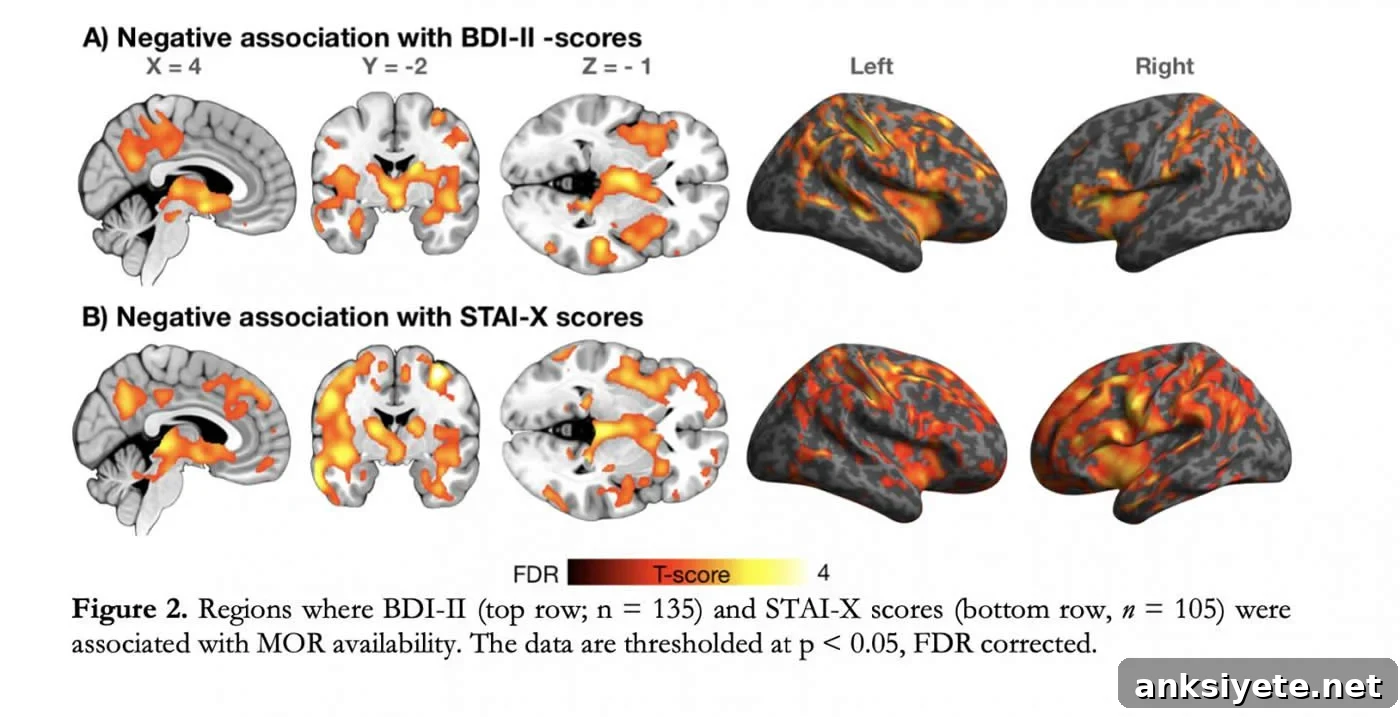
Researchers at the Turku PET Centre have identified a clear relationship between the brain’s μ-opioid receptor (MOR) system and subclinical symptoms of depression and anxiety. The study indicates that even subtle depressive and anxious symptoms correspond with measurable differences in opioid receptor availability in several cortical and subcortical regions involved in mood regulation and reward.
Depression and anxiety are commonly characterized by low mood, diminished pleasure (anhedonia), sleep disturbances, and cognitive difficulties. Many of these functions are regulated, in part, by the brain’s opioid signaling. Opioid receptors act as docking sites for endogenous opioids (the brain’s own molecules) and for opioid drugs, and their availability influences how the brain processes pain, reward and emotional responses.
“We observed a consistent pattern: higher self-reported depressive and anxious symptoms were associated with lower availability of mu-opioid receptors,” explains Professor Lauri Nummenmaa of the University of Turku. “These receptors can be influenced both by the brain’s endogenous opioids and by opioid medications. Our findings suggest that opioid-mediated changes in mood may be an important biological mechanism in the central nervous system.”
Using positron emission tomography (PET), the researchers examined brain opioid receptor availability in a large sample of healthy volunteers. The retrospective cross-sectional analysis pooled PET scans from 135 participants (113 males and 22 females). A small dose of the radioligand [11C]carfentanil, which binds selectively to mu-opioid receptors, was injected and tracer decay was measured with PET imaging. Participants’ depressive and anxious symptoms were assessed with validated questionnaires (BDI-II for depressive symptoms and STAI-X for anxiety).
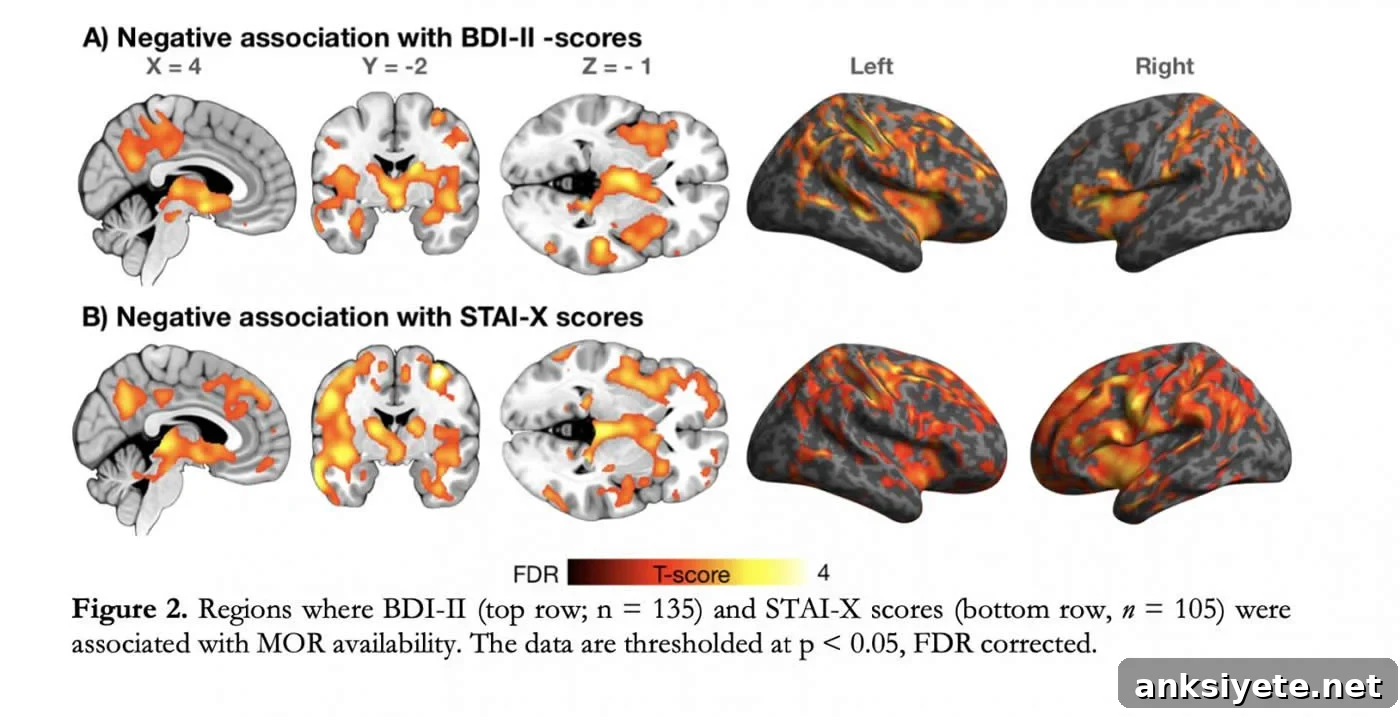
Analyses revealed that subclinical anxiety and depression scores were negatively associated with MOR availability across multiple brain areas linked to emotion and reward processing. Notable regions showing reduced receptor availability included the amygdala and hippocampus, which are central to emotion and memory; the ventral striatum, a key reward-processing hub; and cortical areas such as the orbitofrontal and cingulate cortices, which are implicated in decision-making and mood regulation.
These results support the interpretation that dysregulation of the mu-opioid receptor system can contribute to altered mood and may be a biological factor in the early stages of depressive and anxiety disorders. Detecting such changes in otherwise healthy people reporting mild symptoms suggests that MOR system alterations can occur before a clinical diagnosis.
From a clinical perspective, the findings point to the opioid system as a potential target for therapeutic strategies. Both endogenous opioids and synthetic opioid-based drugs influence mood, so treatments that modulate MOR signaling deserve further investigation as possible options for alleviating depressive symptoms. The authors caution that translating these neuroimaging associations into clinical practice will require careful, controlled research given the risks associated with opioid medications.
The study utilized the AIVO database hosted by Turku University Hospital and Turku PET Centre, which contains in vivo molecular brain scans collected for comprehensive analyses. The full results appear in the journal Neuropsychopharmacology.
Funding: The research was supported by the Academy of Finland and the Sigrid Jusélius Foundation.
About this neuroscience research article
Source:
University of Turku
Media contact:
Lauri Nummenmaa – University of Turku
Image credit:
Lauri Nummenmaa
Original Research: Closed access. Title: “Lowered endogenous mu-opioid receptor availability in subclinical depression and anxiety.” Authors include Lauri Nummenmaa, Tomi Karjalainen, Janne Isojärvi, Tatu Kantonen, Jouni Tuisku, Valtteri Kaasinen, Juho Joutsa, Pirjo Nuutila, Kari Kalliokoski, Jussi Hirvonen, Jarmo Hietala & Juha Rinne. Published in Neuropsychopharmacology. DOI: 10.1038/s41386-020-0725-9.
Abstract summary
The study pooled data from 135 healthy subjects to examine whether alterations in the μ-opioid receptor system are present in subclinical depression and anxiety. PET imaging with the agonist radioligand [11C]carfentanil measured MOR availability, while depressive and anxious symptoms were scored using the BDI-II and STAI-X questionnaires. Both anxiety and depression scores in the subclinical range were negatively associated with MOR availability in multiple cortical and subcortical areas, notably the amygdala, hippocampus, ventral striatum, and orbitofrontal and cingulate cortices. The authors conclude that dysregulated MOR availability is involved in altered mood and may play a role in the pathophysiology of depression and anxiety disorders.