
Summary: CRAFT, a new computational framework created to accelerate drug discovery, has helped scientists identify a promising therapeutic target for epilepsy.
Source: Imperial College London.
New computational framework for drug discovery identifies a possible therapeutic target for epilepsy
CRAFT — the Causal Reasoning Analytical Framework for Target discovery — is a computational approach developed through an international collaboration between Imperial College London, Duke-NUS Medical School and UCB. Designed to accelerate and improve target selection in drug development, CRAFT was applied as a proof-of-concept to epilepsy and helped researchers pinpoint a potential new therapeutic target. The study and its findings were published in Nature Communications.
The work was led by Professor Michael Johnson (Department of Medicine, Imperial College London), Dr Enrico Petretto (Senior Lecturer at Imperial’s Institute of Clinical Sciences and Associate Professor at Duke-NUS) and Dr Rafal Kaminski (UCB). After creating CRAFT to predict new drug targets from genomic data, the team validated their predictions experimentally and showed that pharmacological inhibition of the microglial membrane receptor Csf1R produced anti-seizure effects in preclinical models.
Addressing an urgent unmet need in epilepsy
Epilepsy is a disabling neurological disorder with significant unmet clinical need. Roughly one in three people with epilepsy do not respond to currently available anti-epileptic drugs, and existing therapies are not disease-modifying or curative. Traditional drug discovery for central nervous system disorders faces high failure rates, often because target validation is insufficient in the early stages of development.
Professor Johnson highlights the difficulty of finding drug targets for brain diseases. Using CRAFT, his team was able to discover and validate a candidate anti-epileptic target in under two years. The researchers describe the study as an example of a successful partnership between academia and industry that not only produced a potential drug candidate but also introduced an approach that could speed up identification of targets across many diseases.
A systems-level, data-driven strategy
CRAFT combines large-scale gene expression data with systems-level causal reasoning to identify membrane receptors that regulate disease-related gene networks. Starting from gene expression profiles derived from the tissue affected by disease, the framework integrates information about gene regulatory relationships to predict which cell-surface receptors exert directional control over disease-associated genes. This enables computational prediction of actionable drug targets and helps explain disease mechanisms.
Dr Enrico Petretto explains that, unlike traditional pipelines that test single components one at a time, CRAFT adopts a Systems Genetics approach to identify both the gene networks driving disease and their key regulatory control points. The method focuses specifically on membrane receptors because they are readily druggable — more than half of approved drugs target receptors at the cell surface — which increases opportunities for drug repurposing and rapid experimental proof-of-concept studies.
Using CRAFT to analyze epilepsy-related gene expression, the team identified the microglial receptor Csf1R as a regulator of disease-associated gene networks. They then validated this prediction by showing that blocking Csf1R reduced seizure activity in three different preclinical models of epilepsy, supporting the receptor as a potential therapeutic target.
Dr Rafal Kaminski notes that this approach moves away from traditional high-throughput screening toward computational identification of disease drivers and matching those drivers to existing drugs or drug mechanisms. That shift could substantially shorten the time required to bring new treatments to patients.
Source: Genevieve Timmins, Imperial College London.
Publisher: NeuroscienceNews.com.
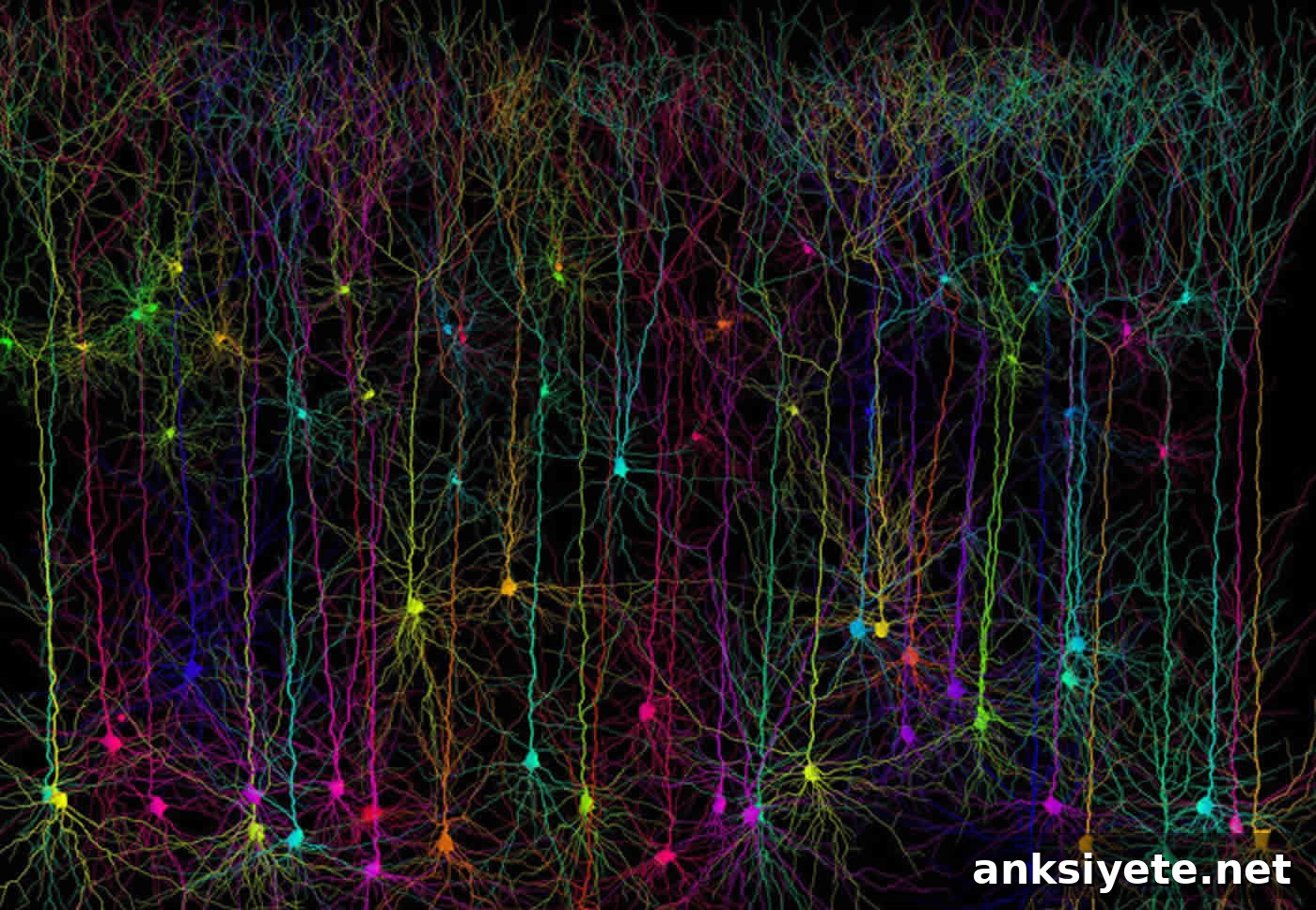
Image credit: Dr Hermann Cuntz & Prof. Michael Häusser, UCL.
Original Research: Prashant K. Srivastava et al., “A systems-level framework for drug discovery identifies Csf1R as an anti-epileptic drug target,” Nature Communications, published September 3, 2018. doi: 10.1038/s41467-018-06008-4
A systems-level framework for drug discovery identifies Csf1R as an anti-epileptic drug target
Identifying drug targets for brain diseases is particularly challenging. To address this, the authors developed and experimentally validated CRAFT, a computational framework that combines gene regulatory information with causal reasoning to nominate cell membrane receptors that influence disease-related gene expression. Using a systems genetics approach and tissue-specific gene expression data, CRAFT predicts membrane receptors with directional effects on disease gene profiles. Applied to epilepsy, CRAFT identified the tyrosine kinase receptor Csf1R as a candidate therapeutic target. Pharmacological blockade of Csf1R attenuated seizures in three preclinical epilepsy models, supporting the framework’s value for target discovery and suggesting Csf1R blockade as a novel therapeutic strategy in epilepsy. CRAFT is applicable to other disease areas as well.
This research demonstrates how integrating large-scale genomic data with causal and regulatory information can reveal druggable control points in complex diseases. By prioritizing membrane receptors, the CRAFT framework helps bridge computational predictions and experimental validation, enabling faster progression from target discovery to therapeutic testing.