
Summary: Researchers reveal the role corticotropin-releasing factor produced by neurons plays in alcohol withdrawal symptoms.
Source: Scripps Research Institute
When a heavy drinker attempts to stop for a night, the body can react with trembling hands, heart palpitations, anxiety and headaches. These acute alcohol withdrawal symptoms—and especially the longer-lasting emotional distress that can persist during extended abstinence—are major reasons people with alcohol use disorder struggle to quit.
Scientists at Scripps Research have advanced our understanding of how alcohol withdrawal is mediated in the brain by identifying which neurons do and do not contribute to this process.
Previous work connected a signaling molecule called corticotropin-releasing factor (CRF) to alcohol withdrawal: blocking CRF in addicted rats and mice reduces drinking. Researchers had assumed that CRF important for withdrawal originated from neurons within the central nucleus of the amygdala (CeA), a brain region closely linked to stress and emotional behavior.
However, a new study published in Molecular Psychiatry (March 2022) shows that, at least in mice, the CRF-expressing neurons in the CeA are neither required nor sufficient to drive alcohol dependence or withdrawal-related drinking behavior.
“Understanding the basis of withdrawal is crucial for treating alcohol addiction, because withdrawal itself motivates excessive drinking,” says Candice Contet, Ph.D., associate professor in the Department of Molecular Medicine at Scripps Research. “The results were unexpected, but they bring us closer to a clearer picture of how CRF contributes to addiction.”
Many studies have reported increased CRF activity in the CeA during alcohol withdrawal and under other psychological stressors. For that reason, pharmaceutical efforts have targeted CRF signaling as a potential treatment avenue for various stress-related disorders, including alcohol dependence. Yet clinical outcomes in humans have been mixed, and the precise cellular origin of CRF acting in the amygdala during withdrawal had not been identified.
Contet’s group tested the hypothesis that CRF-producing interneurons inside the CeA supply the CRF that drives withdrawal-related drinking. Using modern neuroscience tools, they both activated and inhibited these CeA CRF neurons in mice that were made dependent on alcohol.
First, the researchers stimulated the CeA CRF neurons in patterns meant to mimic cycles of repeated drinking and withdrawal. Although these manipulations triggered CRF release in the CeA, they did not change the mice’s voluntary alcohol consumption. In other words, forcing these neurons to fire did not increase drinking.
Next, the team inhibited the same CRF neurons in alcohol-dependent mice. Surprisingly, blocking their activity also failed to alter alcohol intake or typical withdrawal-related behaviors. Those results indicate that the CRF signaling that appears to influence drinking in the CeA is not produced by the CeA neurons themselves.
“We found that activating or silencing CeA CRF neurons is neither sufficient nor necessary for escalated alcohol drinking in mice,” Contet explains. “This implies that CRF acting in the CeA during dependence comes from a different brain region.”
Other neurons elsewhere in the brain are known to produce CRF, but the study does not yet identify which of those sources supply the CeA during withdrawal. The discovery highlights the complexity of CRF circuitry and the rewiring that follows chronic alcohol exposure.
Co-first author Melissa Herman, a former postdoctoral researcher at Scripps Research, emphasizes the importance of the unexpected findings: “These results underscore how CRF circuits can differ across brain regions and adapt after prolonged alcohol use.”
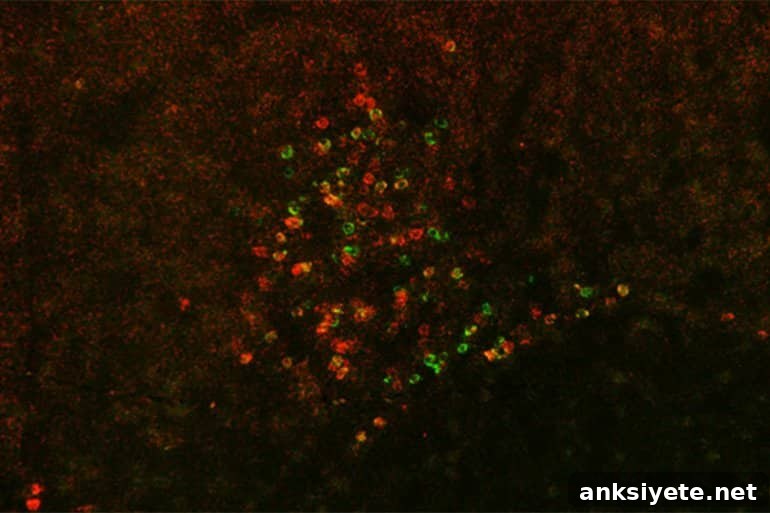
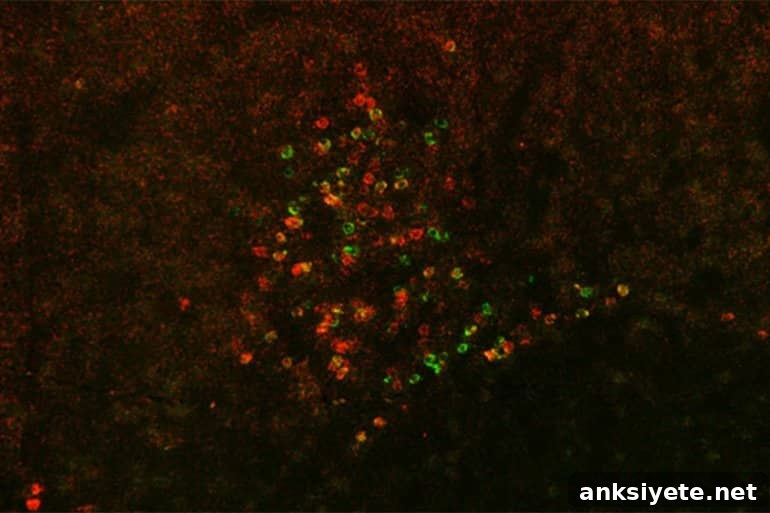
While probing the organization of CeA CRF neurons, the team made another notable observation: the spatial arrangement of these neurons in mice differed from what has been reported in rats. That species difference may help explain why previous rat studies concluded that CeA CRF neurons are essential for withdrawal, whereas the new mouse data do not support that conclusion.
“Because rats and mice show different CRF neuron organization, we must be cautious in extrapolating these results to humans,” Contet cautions. “The species differences mean additional work is needed to determine which CRF sources are most relevant to human alcohol withdrawal and dependence.”
The researchers plan follow-up experiments to identify alternative CRF-producing regions that project to the CeA and to explore how CRF circuitry changes across species after chronic alcohol exposure.
Authors of the study include Candice Contet, Max Kreifeldt, Melissa Herman, Harpreet Sidhu, Agbonlahor Okhuarobo, Giovana Macedo, Roxana Shahryari, Pauravi Gandhi and Marisa Roberto, all affiliated with Scripps Research.
About this alcohol withdrawal research news
Author: Press Office
Source: Scripps Research Institute
Contact: Press Office – Scripps Research Institute
Image: The image is credited to Scripps Research Institute
Original Research: Closed access. “Central amygdala corticotropin-releasing factor neurons promote hyponeophagia but do not control alcohol drinking in mice” by Max Kreifeldt et al., Molecular Psychiatry.
Abstract
Central amygdala corticotropin-releasing factor neurons promote hyponeophagia but do not control alcohol drinking in mice
Corticotropin-releasing factor (CRF) signaling in the central nucleus of the amygdala (CeA) is implicated in rodent models of excessive alcohol drinking, but the source of CRF acting on the CeA during alcohol withdrawal has remained unclear.
This study tested whether CeA CRF interneurons provide a behaviorally relevant source of CRF that increases motivation for alcohol via negative reinforcement. The researchers observed that Crh mRNA expression in the anterior mouse CeA correlates with alcohol intake in male C57BL/6J mice after chronic binge drinking and increases following chronic intermittent ethanol (CIE) exposure.
Chemogenetic activation of CeA CRF neurons in Crh-IRES-Cre mouse brain slices increased GABA release in the medial CeA, partly through CRF1 receptor activation. Activation also exaggerated novelty-suppressed feeding in alcohol-naïve mice, a behavioral effect resembling withdrawal, but it did not change voluntary alcohol consumption after either acute or chronic manipulation.
Similarly, chemogenetic inhibition of CeA CRF neurons did not alter alcohol intake or novelty-suppressed feeding in mice exposed to air or CIE. Together, these findings show that while CeA CRF neurons locally release GABA and CRF and can promote hyponeophagia in naïve mice, they do not drive escalated alcohol intake or negative affect in CIE-withdrawn mice. This contrast with prior rat studies highlights species-specific engagement of CRF circuits in alcohol dependence.