
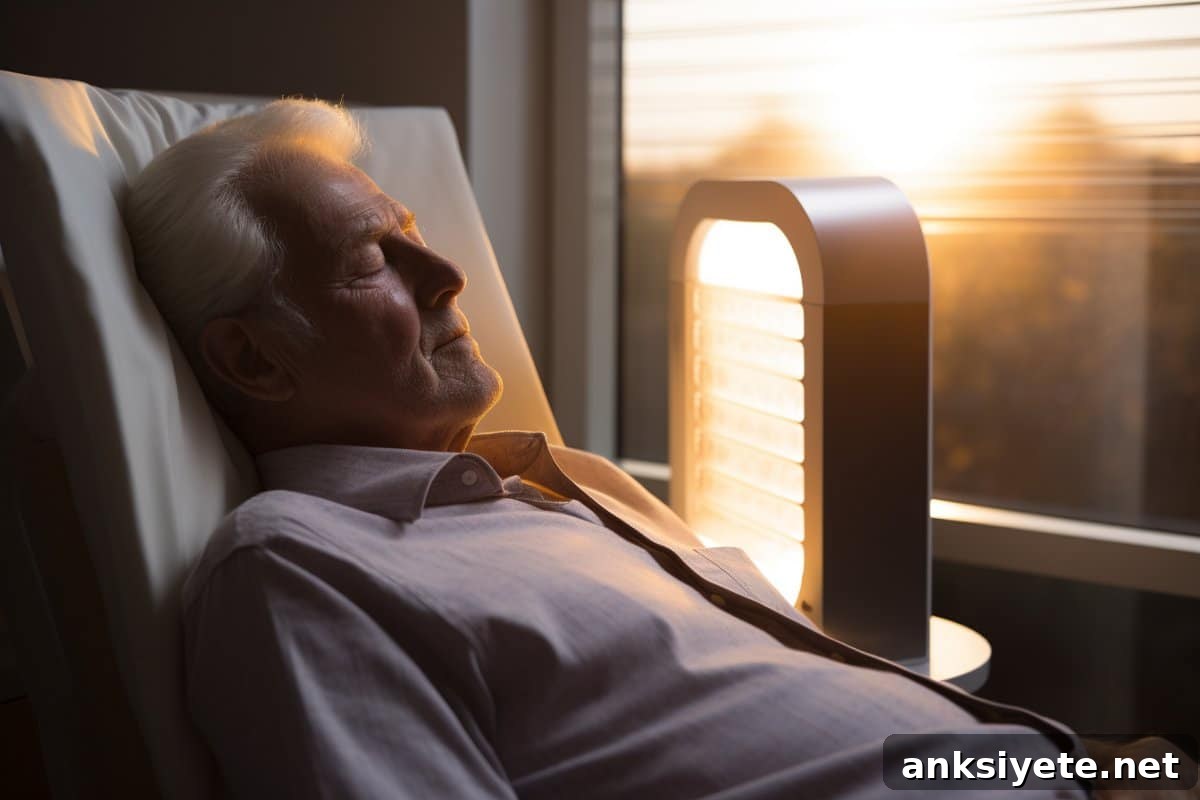
Summary: A new meta-analysis finds that light therapy substantially improves sleep and reduces psycho-behavioral symptoms in people with Alzheimer’s disease. This non-pharmacological approach—targeting the brain’s sleep-regulating center—showed meaningful benefits for sleep efficiency, circadian rhythm stability, mood, agitation and caregiver burden, suggesting a safe, promising option to improve quality of life for patients and families.
Researchers reviewed fifteen randomized controlled trials involving a total of 598 patients across seven countries. The pooled evidence indicates that photobiomodulation, commonly called light therapy, provides measurable improvements in sleep and behavior for people with Alzheimer’s disease, though the authors recommend larger trials to confirm long-term effects and fully assess safety.
Key Facts:
- Light therapy improves sleep efficiency, strengthens circadian rhythm stability, and decreases rest–activity fragmentation in patients with Alzheimer’s disease.
- This analysis pooled data from 15 randomized controlled trials (598 patients) conducted between 2005 and 2022 in seven countries, supporting the intervention’s applicability across settings.
- Light therapy also reduced symptoms of depression and agitation and eased caregiver burden; however, the authors call for larger trials to further validate efficacy and monitor potential adverse responses.
Source: PLOS
Light therapy produces significant improvements in sleep and psycho-behavioral symptoms in Alzheimer’s disease, according to a new meta-analysis published in PLOS ONE by Qinghui Meng (Weifang Medical University, China) and colleagues.
Cognitive decline in Alzheimer’s disease is frequently accompanied by sleep disturbances and psycho-behavioral symptoms such as apathy, depression, agitation and aggression. These symptoms contribute heavily to caregiver strain and often drive hospital admissions. Light therapy—delivering controlled exposure to bright light—aims to stimulate the suprachiasmatic nucleus (SCN), the brain’s primary circadian pacemaker, to restore more normal sleep–wake patterns.
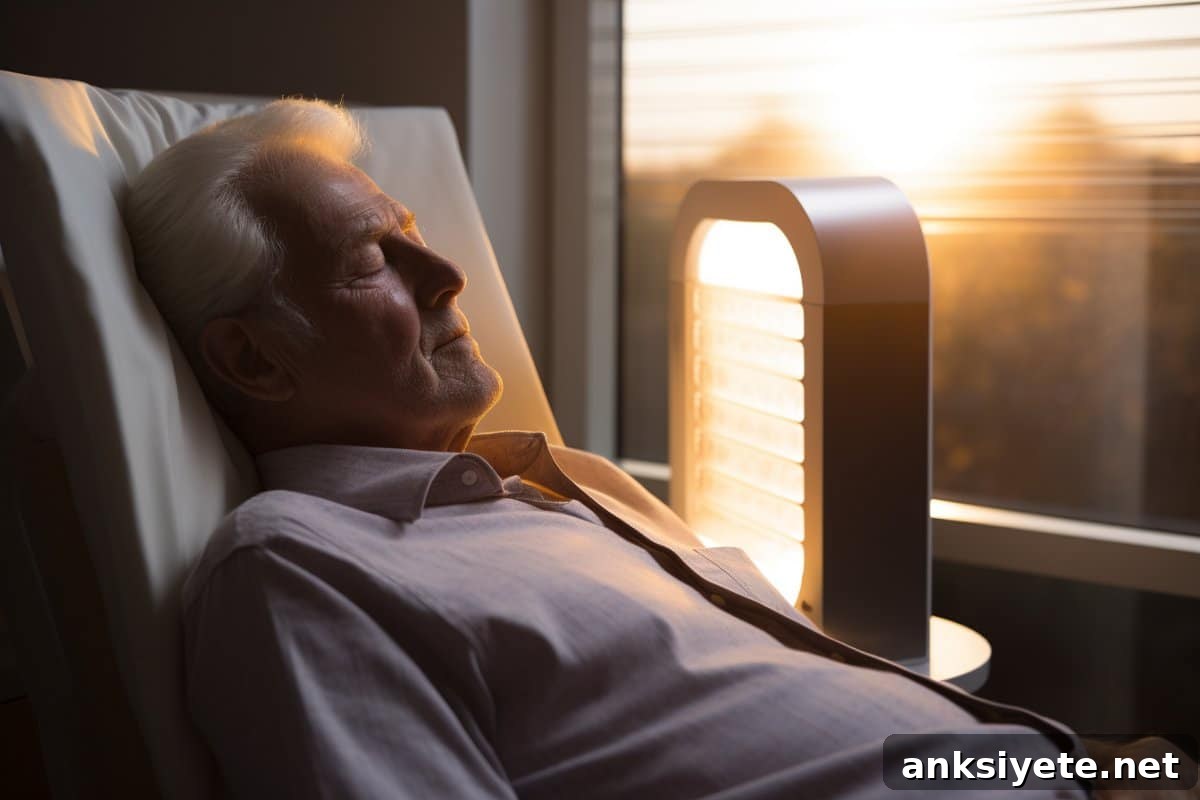
Although light therapy has received growing attention as a non-drug intervention for Alzheimer’s-related sleep and behavioral problems, a rigorous synthesis of randomized evidence had been lacking. To address this gap, the authors conducted a systematic search of major databases to identify randomized controlled trials of light therapy in Alzheimer’s disease or dementia up to December 2022.
Fifteen high-quality trials met inclusion criteria. These studies reported methods and outcomes in English and spanned a range of settings and light therapy protocols. The meta-analysis used fixed-effects modeling to pool results across trials and quantify overall treatment effects.
Pooled results showed statistically significant improvements across multiple sleep-related measures. Light therapy increased sleep efficiency, enhanced interdaily stability (a measure of circadian rhythm strength), and reduced intradaily variability (fewer transitions between rest and activity during the day). For psycho-behavioral outcomes, the intervention reduced depressive symptoms and agitation and lowered caregiver burden, with consistent effects across the included trials.
Numerical findings reported in the meta-analysis included meaningful mean differences favoring light therapy for sleep efficiency and circadian stability measures, as well as for depression and agitation scores. While effect sizes varied by outcome, the overall pattern supports light therapy as a beneficial, low-risk intervention for many patients with Alzheimer’s disease.
The authors emphasize that, despite encouraging results, the limitations of the existing literature—particularly relatively small sample sizes and variability in light intensity and duration—mean larger, standardized trials are needed. Future research should examine optimal dosing, timing, and delivery methods, and monitor for any potential adverse behavioral responses to bright light exposure.
In conclusion, the meta-analysis finds that light therapy meaningfully improves sleep and psycho-behavioral symptoms in people with Alzheimer’s disease and appears to have relatively few side effects, making it a promising adjunctive treatment option to consider alongside other care strategies.
The authors note: “Light therapy improves sleep and psycho-behavioral symptoms in patients with Alzheimer’s disease and has relatively few side effects, suggesting that it may be a promising treatment option for patients with Alzheimer’s disease.”
About this Alzheimer’s disease research news
Author: Hanna Abdallah (PLOS)
Source: PLOS
Contact: Hanna Abdallah – PLOS
Image credit: Neuroscience News
Original Research: Open access. “The effect of light therapy on sleep disorders and psychobehavioral symptoms in patients with Alzheimer’s disease: A meta-analysis” by Qinghui Meng et al., published in PLOS ONE (2024).
Abstract
The effect of light therapy on sleep disorders and psychobehavioral symptoms in patients with Alzheimer’s disease: A meta-analysis
Background
Alzheimer’s disease is primarily known for cognitive decline but commonly coexists with sleep disorders and psychobehavioral symptoms—depression, agitation and psychosis among them—which are major contributors to hospitalization and caregiver strain. Research on light therapy has focused more on sleep outcomes, while investigations into behavioral symptoms are increasing. Results have varied, in part because outcomes depend on treatment factors such as light intensity and exposure duration, warranting further systematic study.
Objective
To evaluate whether light therapy improves sleep disorders and psychobehavioral symptoms in patients with Alzheimer’s disease.
Methods
The authors searched Embase, the Clinical Trials Registry, Web of Science, PubMed and the Cochrane Library through December 2022 for randomized controlled trials of light therapy in Alzheimer’s disease or dementia. Data were analyzed using a fixed-effects model to estimate pooled effects.
Results
Fifteen randomized controlled trials including 598 patients met inclusion criteria. For sleep outcomes, light therapy significantly improved sleep efficiency, increased interdaily stability (a marker of circadian rhythm strength), and reduced intradaily variability (fewer daytime rest–activity transitions). For psychobehavioral outcomes, pooled estimates showed reductions in depressive symptoms, decreased agitation, and lower caregiver burden, with statistical significance across measures.
Conclusion
Light therapy produced significant improvements in sleep and psychobehavioral symptoms in patients with Alzheimer’s disease and was associated with relatively few side effects. These findings support light therapy as a promising adjunctive treatment for selected symptoms of Alzheimer’s disease, while highlighting the need for larger, standardized trials to refine clinical recommendations.