
Disruptions in brain networks appear alongside spinal fluid markers in early Alzheimer’s disease
Researchers at Washington University School of Medicine in St. Louis report that changes in brain network connectivity can be detected at about the same time that established biochemical markers of early Alzheimer’s disease appear in cerebrospinal fluid. The findings suggest that noninvasive brain imaging may provide an effective complement—or alternative—to spinal fluid tests for identifying the earliest stages of the disease.
“Monitoring damage to large-scale brain networks gives us a clearer picture of what the brain goes through before dementia becomes clinically apparent,” said Beau Ances, MD, PhD, an associate professor of neurology and biomedical engineering and the study’s senior author. Early diagnosis is a major priority in Alzheimer’s research because interventions begun before dementia develops are thought to have a better chance of slowing or preventing progression.
The study followed 207 older adults who were cognitively normal at enrollment, each participating at the Charles F. and Joanne Knight Alzheimer’s Disease Research Center. Over multiple years the research team collected cerebrospinal fluid samples and performed repeated resting-state functional magnetic resonance imaging (fMRI).
Cerebrospinal fluid analyses focused on two well-established biochemical markers of early Alzheimer’s disease: amyloid beta (the principal component of amyloid plaques) and tau protein (a structural protein that, when abnormal, indicates neuronal injury). In participants who went on to show early biochemical changes—amyloid beta levels that declined and tau levels that rose—the team observed concurrent alterations in resting-state fMRI measures.
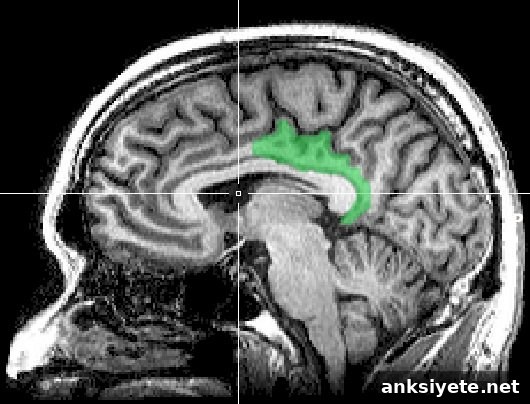
Resting-state fMRI measures spontaneous fluctuations in blood flow across brain regions while a person is at rest. Researchers use these fluctuations to map functional connectivity within intrinsic networks, including the default mode network (DMN). The DMN is a set of brain regions that show coordinated activity when people are not focused on an external task and is strongly associated with memory and self-referential thought.
Previous research by Ances and others has shown that Alzheimer’s disease selectively damages connections within the default mode network and other large-scale networks. In this study, the most pronounced early connectivity loss occurred between the posterior cingulate cortex and medial temporal regions—two areas critical for memory processing. That network disruption emerged on the same timeline as the cerebrospinal fluid marker changes, indicating that functional connectivity measures mirror biochemical indicators of early disease.
These results position resting-state fMRI as a promising, less invasive tool for early detection. While lumbar puncture to obtain cerebrospinal fluid remains a reliable method to measure amyloid and tau, functional imaging does not require spinal fluid extraction and can be repeated regularly with minimal risk. Combining imaging and fluid biomarkers may improve diagnostic accuracy and give clinicians a more detailed view of disease progression in its preclinical and early symptomatic stages.
The research team continues to track these volunteers and to study individuals in the earliest stages of Alzheimer’s-related cognitive decline. Ongoing work aims to refine how changes in network connectivity relate to future cognitive trajectories and to determine whether imaging measures can reliably predict which individuals will develop clinically significant memory impairment.
Notes about this Alzheimer’s disease research
Funding for the study was provided by the National Institute of Neurological Disorders and Stroke, the National Institute of Mental Health, the National Institute on Aging, the American Roentgen Ray Society, the Charles F. and Joanne Knight Alzheimer’s Disease Research Center, the National Institute of Nursing Research, and the Alzheimer’s Association.
(Editor’s note: This release corrects an earlier version that misstated which biochemical markers were used to diagnose early Alzheimer’s disease.)
Written by Michael C. Purdy
Contact: Michael C. Purdy — Washington University at St. Louis
Source: Washington University at St. Louis press release
Image Source: The MRI brain scan image is credited to Geoff B. Hall and has been released into the public domain.
Original Research: Abstract for “Cerebrospinal fluid amyloid beta 42, phosphorylated tau, and resting state functional connectivity” by Wang L, Brier MR, Snyder AZ, Thomas JB, Fagan AM, Xiong C, Benzinger TL, Holtzman DM, Morris JC, and Ances BM in JAMA Neurology. Published online August 19, 2013 (doi:10.1001/jamaneurol.2013.3253)