
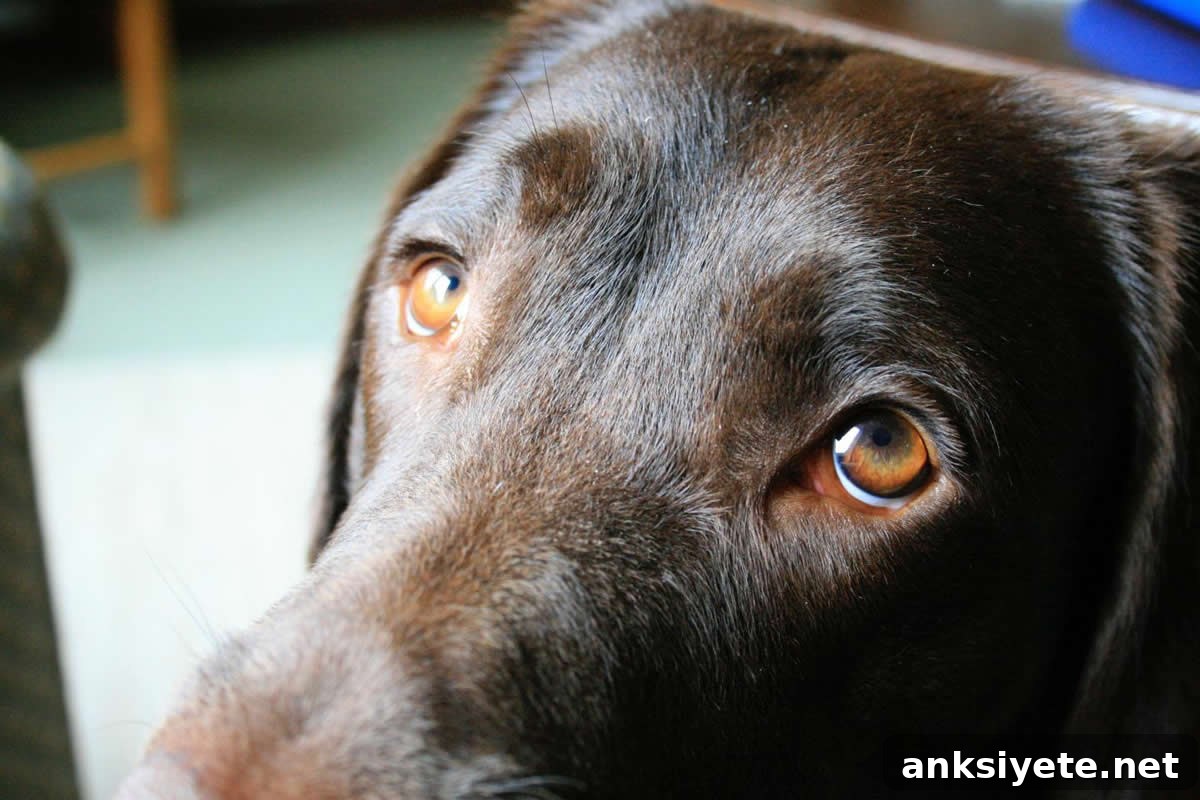
Summary: Domestication altered dogs’ facial muscles in ways that improve their ability to communicate with people. A small muscle above the eye enables dogs to lift the inner eyebrow more intensely than wolves, producing a look that appears more infant-like and resembles a human sad expression—traits that may trigger caregiving responses from humans.
Source: University of Portsmouth
New research comparing the facial anatomy and behavior of dogs and wolves suggests that domestication changed dogs’ facial muscles specifically to enhance communication with humans.
In the first detailed comparison of facial anatomy and behavior between dogs and their closest wild relatives, wolves, researchers found the two species share most facial musculature—but they differ in a key area above the eye. Dogs possess a distinct, consistently present muscle that enables a pronounced raise of the inner eyebrow. This same muscle is absent or only a sparse, irregular cluster of fibers in wolves.
The study’s authors propose that this inner-eyebrow raise makes a dog’s eyes look larger and more childlike while also imitating a human expression of sadness. Those visual cues appear to elicit nurturing and protective responses from people. Over thousands of years of domestication, such a trait may have given expressive dogs a selection advantage, reinforcing what we now call “puppy dog eyes.”
The research team was led by comparative psychologist Dr. Juliane Kaminski at the University of Portsmouth and included behavioral and anatomical experts from the UK and the United States. The findings are published in the journal Proceedings of the National Academy of Sciences (PNAS).
Dr. Kaminski summarized the evidence: dogs consistently have the muscle that produces a strong inner eyebrow raise while wolves do not. In behavioral trials where animals were exposed to a human for two minutes, dogs produced the inner-eyebrow movement more often and at higher intensities than wolves. The most intense movements were observed only in dogs.
“These results strongly indicate that dogs evolved a facial muscle after domestication that enhances their ability to communicate with humans,” Dr. Kaminski said. “When dogs perform this movement, it appears to trigger an instinctive desire in humans to care for them, which could have provided an evolutionary advantage for dogs that displayed this behavior.”
Dr. Kaminski’s earlier work showed that dogs use this eyebrow movement more when a human is looking at them, suggesting the action is used intentionally in social interaction. She and co-author Professor Bridget Waller labeled the movement Action Unit 101 (AU101) when mapping canine facial musculature.
Co-author and lead anatomist Professor Anne Burrows (Duquesne University) emphasized the anatomical contrast between species: the levator anguli oculi medialis—the muscle primarily responsible for raising the inner eyebrow—is uniformly present in dogs but is inconsistent or tiny in wolves. This represents a notable change in soft-tissue anatomy over approximately 33,000 years, a rapid pace compared with typical muscle evolution.
“This is a striking difference for species separated only 33,000 years ago,” the authors note, “and we think the rapid changes in facial muscles are directly linked to dogs’ enhanced social interaction with humans.”
Professor Waller added that the AU101 movement increases paedomorphism—features that make adults look more like infants—while also resembling a human sad face. Both effects likely capture attention and encourage caregiving. Anatomist Adam Hartstone-Rose (North Carolina State University) observed that, despite how thin and delicate these muscles are, their impact on human perception appears to have been strong enough to shape evolution during domestication.
Co-author Rui Diogo (Howard University) said the team was surprised by how quickly these muscular changes occurred. Soft tissues like muscle rarely fossilize, so documenting this kind of evolutionary shift is challenging; the researchers relied on dissections and behavioral observation to reach their conclusions.
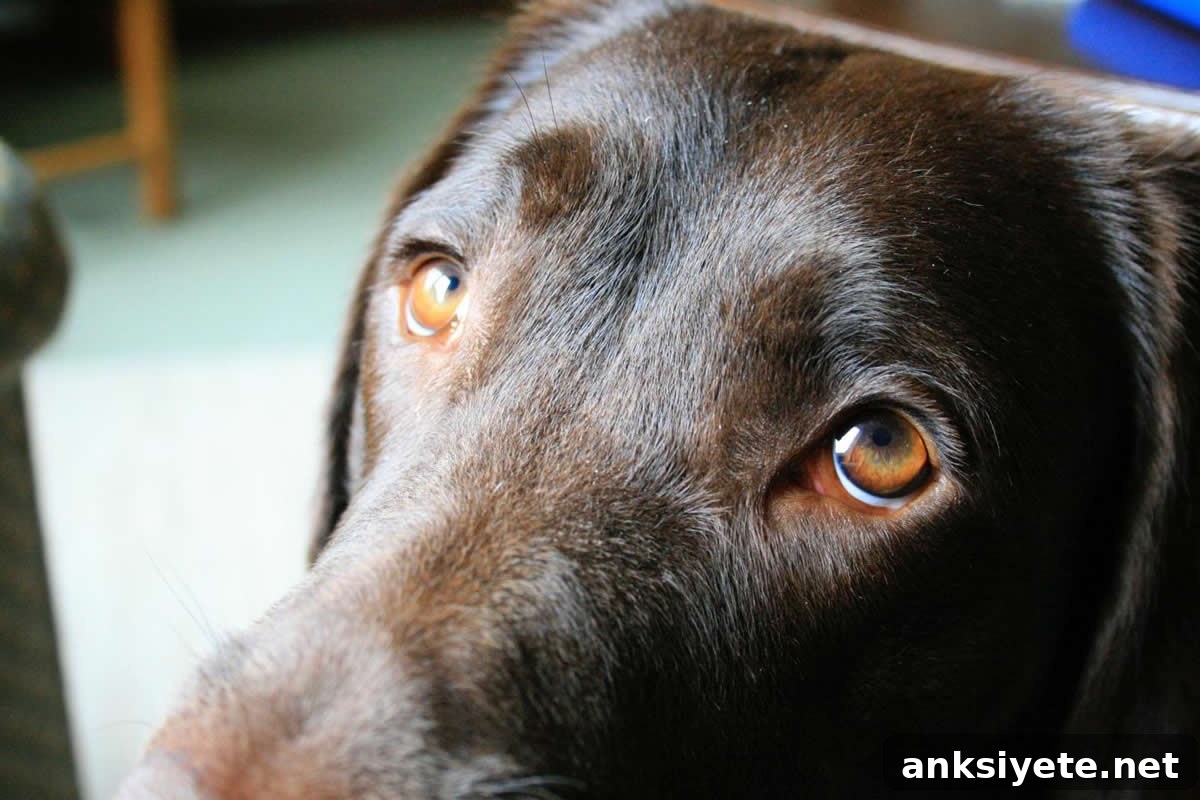
Not every dog breed in the study displayed the muscle: the Siberian husky, an older breed, lacked the consistent muscle found in most modern dogs. The authors also consider an alternative or complementary explanation: humans may have a preference for visible eye whites. Intense AU101 movements can expose more of the sclera, potentially increasing human attention and caretaker responses.
While the precise timing and circumstances under which humans first brought wolves into close association remain unknown, this research clarifies a likely mechanism that helped shape dog domestication: selection for facial expressions that elicit human care and foster stronger interspecies social bonds.
Source:
University of Portsmouth
Media Contacts:
Glenn Harris – University of Portsmouth
Image Source:
The image is credited to The University of Portsmouth.
Original Research: Open access
“Evolution of facial muscle anatomy in dogs.” Authors: Juliane Kaminski, Bridget M. Waller, Rui Diogo, Adam Hartstone-Rose, and Anne M. Burrows. Published in PNAS (doi: 10.1073/pnas.1820653116).
Abstract
Evolution of facial muscle anatomy in dogs
Domestication reshaped wolves into dogs, transforming behavior and anatomy. Dissections show that the levator anguli oculi medialis, a muscle that produces a strong inner-eyebrow raise, is consistently present in dogs but not in wolves. Behavioral observations demonstrate that dogs make this eyebrow movement more frequently and at higher intensity than wolves, with the most intense actions occurring only in dogs. Because the movement increases paedomorphism and resembles a human sad expression, it may trigger nurturing reactions in people. The authors propose that expressive eyebrows provided a selective advantage during domestication, making “puppy dog eyes” a likely outcome of selection based on human preferences.