
Summary: Researchers report that a plasma component normally involved in blood clotting and inflammation may also contribute to the development of Alzheimer’s disease in some patients.
Source: Rockefeller University.
As the average age of the population rises, Alzheimer’s disease is becoming an ever more pressing public health problem. Many recent drug strategies aimed at removing the hallmark amyloid plaques and tau tangles have delivered disappointing results, prompting researchers to explore alternative biological pathways that might drive the disease.
A group of scientists at Rockefeller University has taken a fresh approach by investigating the role of blood-borne processes in Alzheimer’s disease (AD). Their work points to a plasma protein, Factor XII, which is best known for initiating blood coagulation and inflammatory responses, as a potential contributor to brain inflammation and cognitive decline in some forms of AD.
Links between vascular health and dementia are well established. “There’s a lot of evidence that exercise, which keeps blood vessels healthy and maintains steady blood flow, can be protective against AD,” says Sidney Strickland, head of the Patricia and John Rosenwald Laboratory of Neurobiology and Genetics. “Equally, conditions that damage the vascular system, such as diabetes, increase the risk of developing Alzheimer’s.”
However, the mechanisms by which blood and vascular changes influence the brain in Alzheimer’s disease remain unclear. The new study from Strickland’s lab, published in the journal Blood, sheds light on one pathway that could connect blood-borne inflammation and coagulation with early disease processes—offering potential avenues for earlier diagnosis and targeted treatment development.
Exploring the connection between Factor XII and Alzheimer’s
Factor XII is part of a cascade of proteins that trigger coagulation and promote inflammatory signaling. Previous work from the same laboratory showed that beta-amyloid—the sticky protein that accumulates into plaques in Alzheimer’s—can activate this contact system. Other studies had already suggested that components of this pathway are more active in AD patients and in animal models of the disease.
Because clinical symptoms typically appear late in the disease course, it has been difficult to study the earliest events in the human brain. The discovery of genetic mutations responsible for early-onset familial Alzheimer’s disease, however, has allowed researchers to examine changes that occur decades before cognitive decline becomes apparent. Those early changes include rising beta-amyloid levels followed by vascular abnormalities in the brain, sometimes appearing twenty years before symptoms emerge.
“We hypothesized that beta-amyloid might activate Factor XII and that this activation could help initiate processes that lead to Alzheimer’s,” explains Zu-Lin Chen, a senior research associate in the Strickland lab. Since directly testing that hypothesis in humans is impossible, the team turned to mouse models that mimic features of Alzheimer’s disease.
Results from mouse models
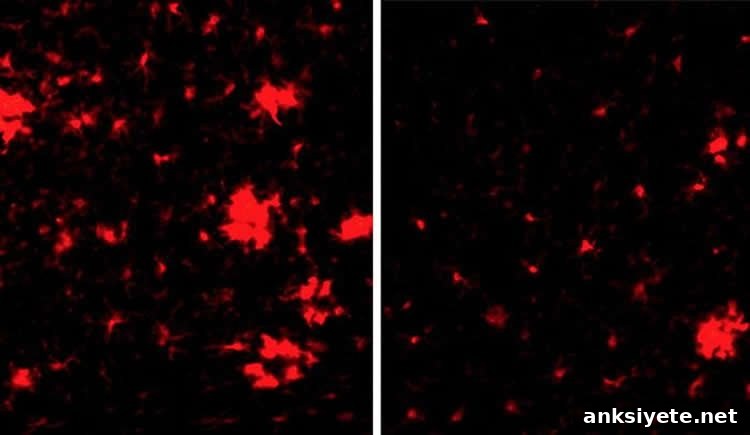
To block Factor XII in mice, researchers used a molecule that prevents the protein from being produced from its gene. Typical AD model mice show elevated brain inflammation compared with healthy controls. Strikingly, AD mice with reduced Factor XII levels displayed substantially lower brain inflammation, with brain tissue more closely resembling that of non-AD animals.
Behaviorally, AD mice with diminished Factor XII performed better on cognitive tests. In a spatial memory task that requires mice to locate an escape hole using visual cues, untreated AD mice typically fail to remember the location. Mice lacking Factor XII learned the task more quickly than untreated AD animals, though their performance did not fully match that of healthy control mice.
Biochemically, depleting Factor XII reduced cleavage of high molecular weight kininogen (HK)—a marker of the inflammatory arm of the contact system—and led to less fibrinogen deposition and reduced neurodegeneration in the brain. Together, these findings indicate that activation of the Factor XII–mediated contact system contributes to vascular inflammation, tissue damage, and cognitive impairment in the animal model.
Researchers caution that while these results are promising, they do not immediately translate into new treatments for people. “We observed significant improvements in our mouse models, but we did not completely reverse the disease,” Chen notes. “Alzheimer’s is multifactorial, and many pathological processes are involved. More work is needed to define which patients have prominent vascular contributions and to develop therapies that specifically target those pathways.”
“Our work adds to growing evidence that vascular abnormalities and blood-borne inflammation can play an important role in cognitive decline for some AD patients,” Strickland says. “By clarifying these vascular mechanisms, we hope to enable more accurate diagnosis and, ultimately, new treatments aimed at this aspect of the disease. Each advance moves us closer to understanding and slowing this devastating condition.”
Source: Katherine Fenz – Rockefeller University
Image credit: Laboratory of Neurobiology and Genetics at The Rockefeller University / Blood
Original research: Chen Z.-L., Revenko A.S., Singh P., MacLeod A.R., Norris E.H., & Strickland S. “Depletion of coagulation factor XII ameliorates brain pathology and cognitive impairment in Alzheimer’s disease mice.” Blood. Published online March 2017. doi:10.1182/blood-2016-11-753202
Abstract
Depletion of coagulation factor XII ameliorates brain pathology and cognitive impairment in Alzheimer’s disease mice
Vascular abnormalities and inflammation occur in many patients with Alzheimer’s disease, but whether those changes cause or exacerbate AD has been unclear. The Factor XII–initiated contact system can drive both vascular pathology and inflammation and is activated in AD patients and AD mouse models. In a mouse model, cleavage of high molecular weight kininogen (HK), a marker of the inflammatory arm of the contact system, increases and coincides with the onset of brain inflammation. Depleting Factor XII in AD mice inhibited HK cleavage in plasma, reduced neuroinflammation, curtailed fibrinogen deposition, and limited neurodegeneration in the brain. Furthermore, Factor XII–depleted AD mice demonstrated improved cognitive performance compared with untreated AD mice. These findings suggest that activation of the Factor XII–mediated contact system contributes to AD pathogenesis and may offer novel targets for therapeutic intervention focused on vascular and inflammatory mechanisms.