
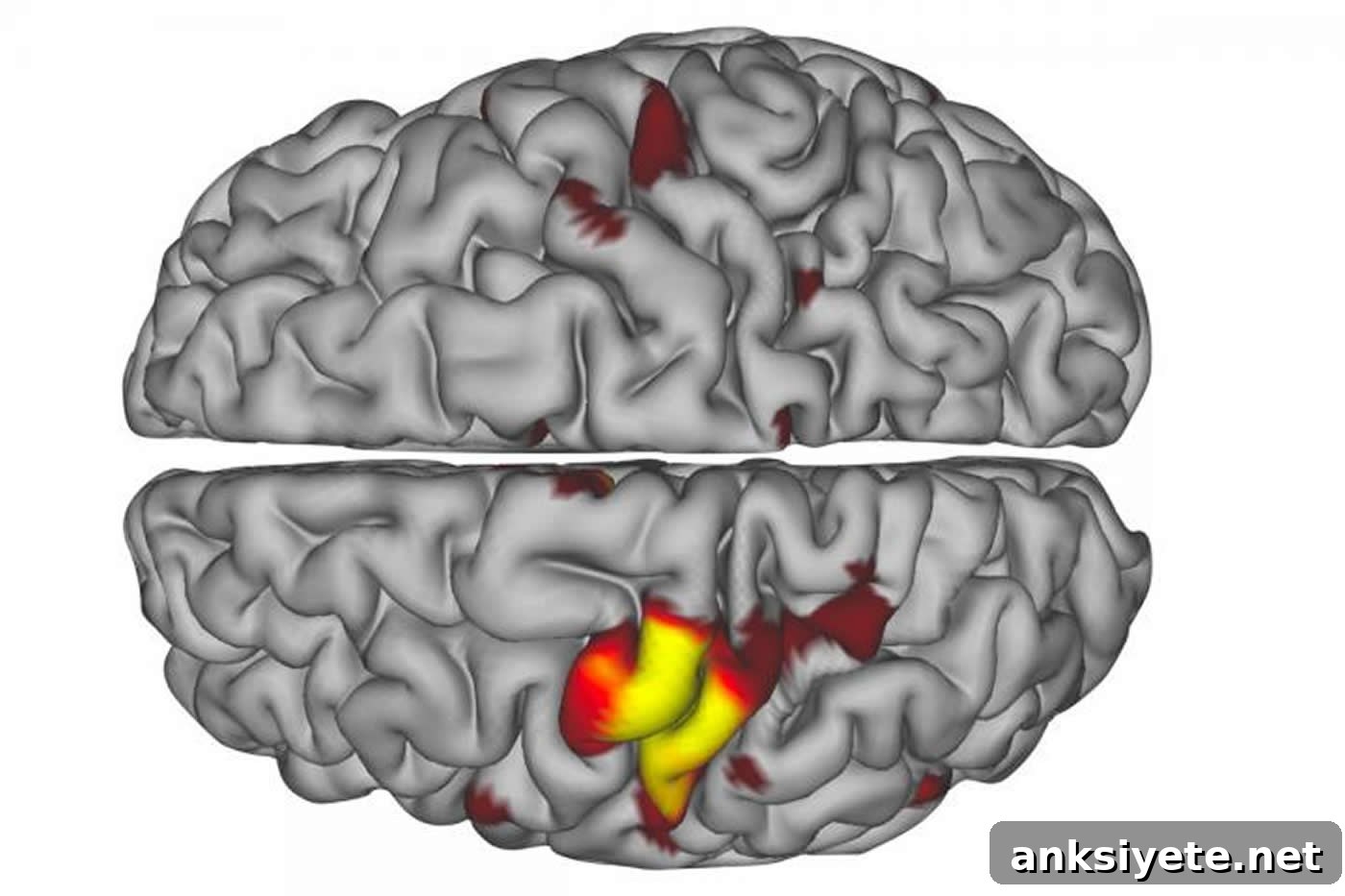
Summary: Researchers identified previously unseen spontaneous neuronal pulses that appear when a limb is immobilized, offering insight into how the brain preserves and restores motor pathways after injury or illness.
Source: WUSTL
A Washington University School of Medicine neuroscientist’s neon-pink arm cast led to the discovery of brief, spontaneous brain activity pulses that emerge when a limb is immobilized.
Researchers at Washington University School of Medicine in St. Louis observed distinctive activity on resting-state functional MRI (rs-fMRI) scans from a neuroscientist who voluntarily wore a cast on his dominant arm. The same pattern was later confirmed in two additional adults who also wore arm casts. By comparing scans taken before, during and after immobilization, the team tracked how motor circuits responded to disuse.
The scans revealed that within 48 hours of casting, the brain regions that normally coordinate movement for the immobilized arm began to functionally disconnect from the broader motor network. At the same time, researchers observed recurring bursts of spontaneous activity — described as “disuse pulses” — running through the isolated sub-circuit. These pulses appear to sustain neural activity while the circuit is not driven by movement, potentially enabling rapid reactivation when mobility is restored through rehabilitation.
The study, published June 16 in Neuron, sheds light on the brain’s capacity for plasticity: how billions of neurons can rewire and restore pathways following injury, immobilization or illness. Better understanding of these protective dynamics could inform therapies for people recovering from broken limbs, stroke, or conditions that force extended immobility.
“There are many clinical situations in which a person does not use an arm or leg for long periods, and the related brain circuits receive much less input,” said senior author Nico Dosenbach, MD, PhD, an assistant professor of neurology. “Knowing precisely how those circuits change over time is essential to improving care and targeting rehabilitation strategies for patients who have lost function.”
In 2015, Dosenbach, who also holds appointments in occupational therapy, pediatrics, radiology and biomedical engineering, deliberately wore a fiberglass cast on his dominant right arm for two weeks, despite having no injury. The cast extended from his fingertips to below his shoulder and was painted neon pink — his daughter’s favorite color. He followed a strict imaging schedule designed to capture individual neural changes rather than averaged group data, which can obscure person-specific anatomy and dynamics.
For two weeks before casting, two weeks during casting and two weeks after removal, Dosenbach underwent daily 30-minute resting-state fMRI scans at dawn. He also wore accelerometers on both wrists to monitor motor use and recorded grip strength throughout the study. The daily sampling strategy and high-fidelity scans enabled the team to detect subtle, rapid changes in connectivity.
Dosenbach reported that changes happened faster than expected: within two days his dominant right arm weakened while his left hand compensated and gained strength. Objective measures confirmed the shift: grip strength in the casted right hand dropped from 124 pounds of force to 90 pounds while the cast was worn. After cast removal, strength gradually returned and normal patterns reestablished.
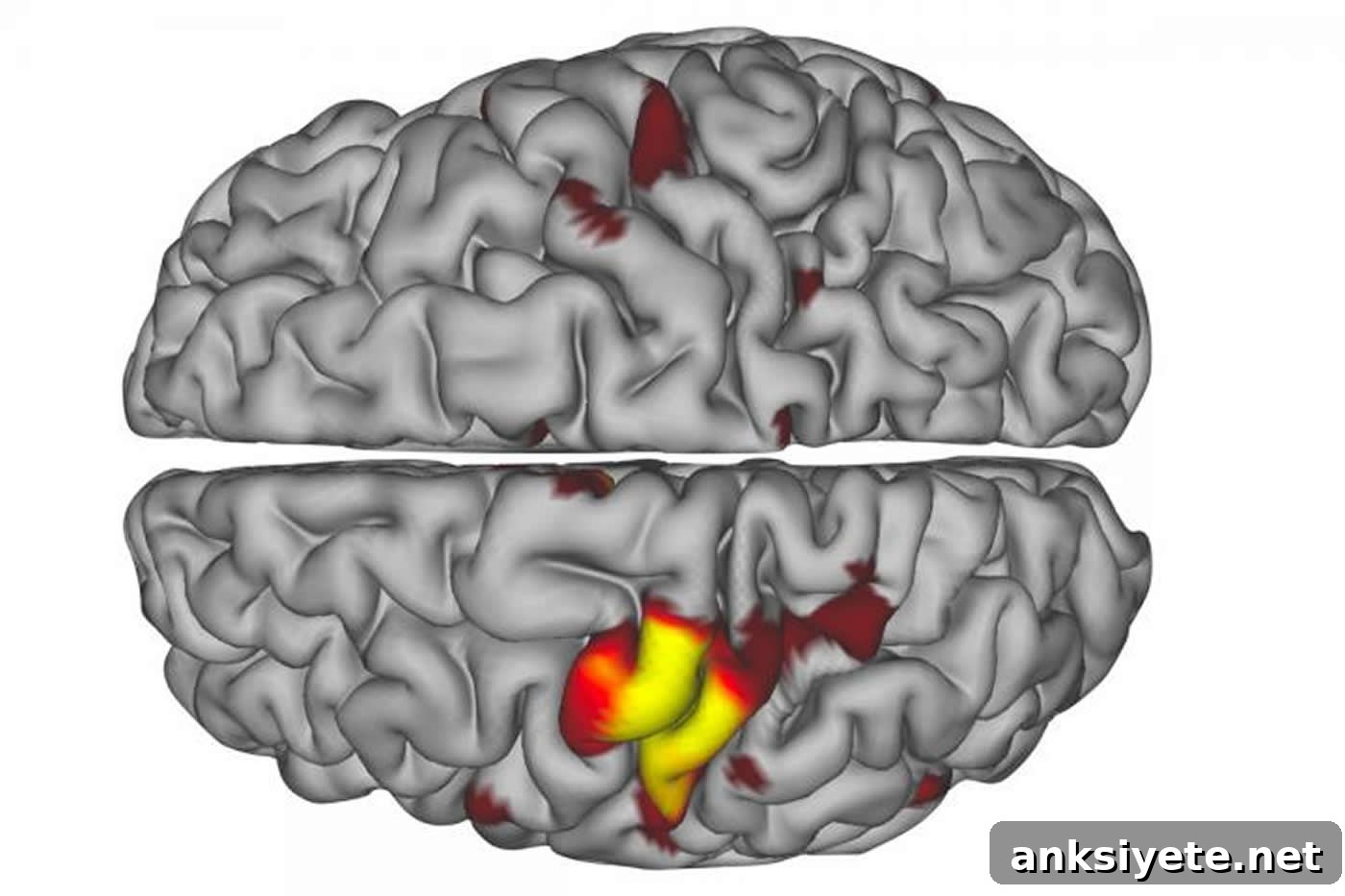
Encouraged by the initial result, Dosenbach and first author Dillan Newbold, a MD/PhD student, repeated the experiment with two other volunteers who similarly wore casts for two weeks — one in fluorescent yellow with doodles and another in forest green. Each participant completed extensive resting-state scans that collectively provided more than 20 hours of recording per person, allowing the researchers to identify and characterize the spontaneous pulses with precision.
The data from the additional participants mirrored Dosenbach’s results: disuse produced a rapid functional disconnection of cortical and cerebellar regions controlling the immobilized limb, while connectivity within the isolated sub-circuit persisted. During immobilization, large spontaneous pulses propagated through the disused sub-circuit, apparently preserving internal activity until the circuit could be re-engaged by movement and therapy.
“Discovering these spontaneous pulses was remarkable,” Newbold said. “Even when a limb is still, neurons appear to protect isolated circuits from complete disengagement. This mechanism could be an important factor in recovery and rehabilitation, though further research is necessary to translate these findings into clinical practice.”
About this neuroscience research article
Source:
WUSTL
Media Contacts:
Judy Martin Finch – WUSTL
Image Source:
The image is credited to WUSTL.
Original Research: Closed access — “Plasticity and Spontaneous Activity Pulses in Disused Human Brain Circuits” by Nico Dosenbach et al., published in Neuron (doi: 10.1016/j.neuron.2020.05.007).
Abstract
Plasticity and Spontaneous Activity Pulses in Disused Human Brain Circuits
Highlights
• Casting the dominant upper extremity for two weeks induced disuse and measurable weakness.
• Brain circuits linked to the immobilized limb functionally disconnected from the broader motor system within 48 hours.
• Internal connectivity within the disused sub-circuit remained preserved during immobilization.
• Large, spontaneous activity pulses propagated through disused circuits and may help maintain those circuits until reactivation.
Summary
To study plasticity in the human brain, investigators immobilized the dominant upper limb for two weeks and tracked functional connectivity changes using daily 30-minute rs-fMRI scans. Casting rapidly produced functional disconnection of cortical and cerebellar regions responsible for the disused limb, while internal connectivity within that sub-circuit persisted. Disconnection emerged within 48 hours, progressed during immobilization and reversed after cast removal. Throughout the cast period, spontaneous activity pulses traveled through the disused somatomotor sub-circuit. These findings suggest the adult brain depends on regular use to maintain its functional architecture and that disuse-driven spontaneous pulses may play a role in preserving temporarily disconnected circuits during recovery.