
Summary: Under certain conditions, people can correctly produce information when prompted by strong semantic cues even though they never consciously stored that information in memory.
Source: Florida Tech
Britannica defines memory as “the encoding, storage and retrieval in the human mind of past experiences.” A recent multi-institutional study including a Florida Tech researcher challenges that traditional definition by showing that correct recall can sometimes occur without prior conscious storage of the information.
The study, titled “Recallable but not recognizable: The influence of semantic priming in recall paradigms,” was led by Florida Tech psychology assistant professor Richard Addante in collaboration with researchers from NASA, SUNY Geneseo, University of Waterloo and Wilfrid Laurier University. The team investigated the mechanisms behind recognition failures—cases in which people correctly recall a word but then fail to recognize it as studied.
Published in the January issue of Cognitive, Affective & Behavioral Neuroscience, the paper demonstrates that the ability to produce a word in response to a cue does not necessarily mean the person consciously remembers studying that word.
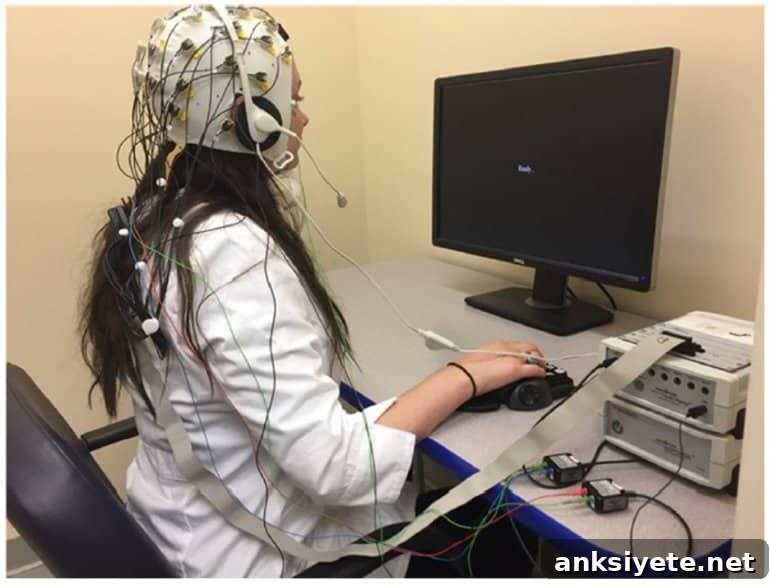
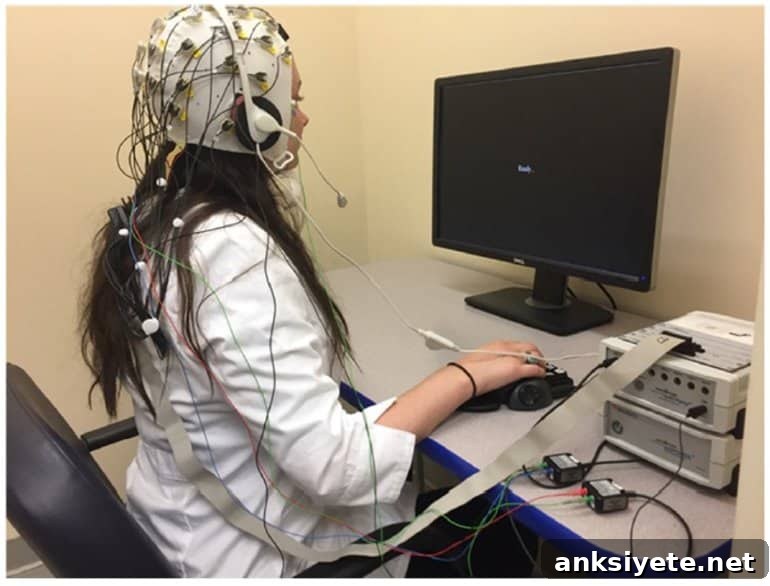
To better understand why these memory errors arise, the researchers combined behavioral experiments with brain activity measurements. They developed a more sensitive approach to measuring memory by using electrophysiological data (EEG) alongside traditional behavioral results, which allowed them to pinpoint cognitive processes involved when participants could not identify the source of recalled information.
Across five experiments, the study found that recall—long thought to be driven mainly by conscious, recollection-based processes in episodic memory—can sometimes be supported by implicit cognitive mechanisms such as repetition fluency and semantic priming. For example, if participants are presented with cue words like “doctor,” “nurse,” and “syringe,” those strong semantic associations may prompt the correct retrieval of a related target such as “hospital,” even if the participant later does not recognize having studied that specific word.
These findings carry important implications for clinical assessment. Memory recall tests are commonly used to evaluate cognitive function and to detect impairments from brain injury, Alzheimer’s disease, and dementia. If correct recall can be driven by nonconscious processes, clinicians risk misinterpreting intact recall as intact conscious memory, potentially missing diagnoses of selective memory impairment.
“When we test patients, we need to determine whether conscious or nonconscious memory systems are affected,” Addante explained. “If patients can recall items, we often assume their conscious recollection is intact. But our results show that nonconscious, implicit processes can produce correct recall, so relying on recall alone could obscure the true nature of a patient’s memory impairment.”
The study’s data highlight two main points: standard cued-recall measures can be contaminated by implicit memory influences, and treating cued recall as a straightforward index of explicit memory is not always appropriate. Addante recommends that future research and clinical assessments consider the possible contribution of implicit processes to correct recall and, when feasible, include additional measures to confirm that a recalled response reflects explicit recollection.
This research represents the culmination of seven years of collaborative work across two countries and multiple experiments. Addante described the effort as “teamwork and science,” and said the next step is to translate these findings into clinical practice to see whether memory errors can be reduced or prevented. He also noted that his earlier work developed audio and visual stimulation protocols that modulate brain activity at specific frequencies and have shown promise for improving memory.
The study also builds on foundational work by Endel Tulving, whose distinction between conscious and nonconscious memory processes dates back to the 1960s and 1970s. Tulving’s models continue to guide memory research today; the new findings refine and extend those classic ideas by offering neural and behavioral evidence that recall can be supported by a mixture of explicit and implicit processes.
Working closely with Tulving’s theoretical framework was meaningful for the team, including Lindsey Sirianni, who completed the research as part of her master’s thesis. Addante recalled telling his students that it is rare as a graduate student to contribute findings that suggest improvements to how landmark researchers like Tulving measured memory.
About this memory research news
Source: Florida Tech
Contact: Ryan Randall – Florida Tech
Image: The image is credited to Florida Tech
Original Research: Closed access. “Recallable but not recognizable: The influence of semantic priming in recall paradigms” by Richard Addante et al. Cognitive, Affective and Behavioral Neuroscience
Abstract
Recallable but not recognizable: The influence of semantic priming in recall paradigms
When people successfully produce a studied word, it is commonly assumed they will also recognize it as previously encountered. Yet in cued-recall experiments participants sometimes correctly recall words in response to strong semantic cues and then fail to recognize those same words as studied. Although prior work has established the boundary conditions that produce this effect, the neural correlates remained unexplored. Across five experiments using both behavioral methods and electrophysiological recordings (EEG), we examined the cognitive and neural processes that underlie these recognition failures. Behavioral results from Experiments 1 and 2 showed that assuming recalled items can automatically be recognized in cued-recall settings is not always valid: recognition failures arise whenever cues are present, whether those failures are subsequently measured or not. ERP data from Experiments 3 and 4 revealed that successfully recalled items that are later recognized show neural signatures consistent with recollection during recall and then a combination of recollection and familiarity at recognition. In contrast, recognition failures lacked those recollection signatures and instead appeared to be driven by semantic priming at recall, followed by ERP effects at recognition consistent with implicit processes such as repetition fluency. Together, these findings indicate that recall—long characterized as primarily reflecting recollection-based episodic memory—can sometimes be supported by a convergence of implicit cognitive mechanisms.