
Protein deposits linked to dementia alter brain activity during sleep
Sleep disturbances are a common symptom in people with Alzheimer’s disease, often appearing before noticeable memory loss. Sleep is also crucial for consolidating memories: during deep non-REM sleep the brain generates slow oscillations, or slow waves, that help transfer newly learned information into long-term storage. Scientists at the Technical University of Munich (TUM) have now demonstrated how Alzheimer’s-associated protein deposits disrupt this sleep-related process, identified the underlying molecular mechanism in animal models, and showed that the impairment can be partially reversed using low doses of medication.
Slow waves originate within networks of cortical neurons and then propagate to other brain regions involved in memory, including the hippocampus. These oscillations coordinate distant neural populations, creating moments of high coherence that signal readiness for information exchange and consolidation. “These waves are a kind of signal through which these areas of the brain send mutual confirmation to say ‘I am ready, the exchange of information can go ahead’,” explains Dr. Marc Aurel Busche from the Department of Psychiatry and Psychotherapy at TUM University Hospital Klinikum rechts der Isar and the TUM Institute of Neuroscience. In work led jointly with Dr. Arthur Konnerth, his team published their findings in Nature Neuroscience.
Impaired propagation of slow waves in Alzheimer models
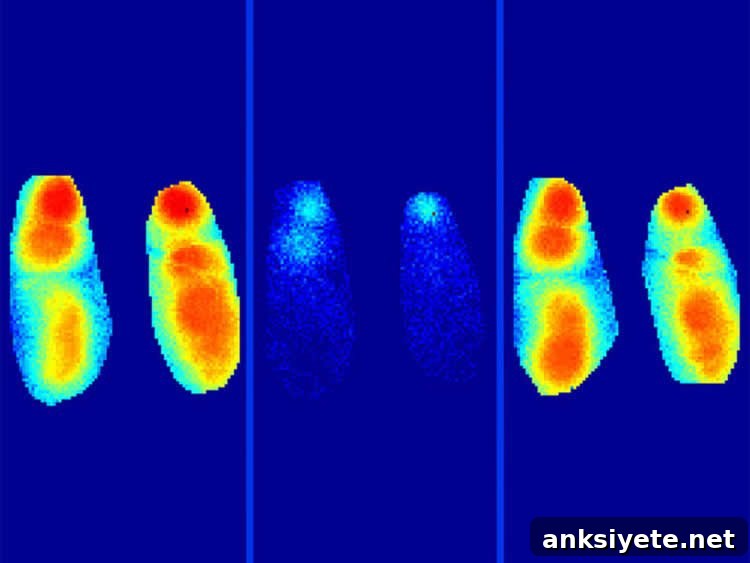
Using mouse models that develop β-amyloid plaques similar to those seen in human Alzheimer’s patients, the researchers found that the otherwise regular slow oscillations no longer propagate correctly. The oscillations themselves still occur, but the long-range spread that creates coherent interactions across distant brain regions is disrupted. As a consequence, brain areas that should exchange information during sleep fail to receive the confirming signal needed for memory consolidation.
At the cellular and synaptic level, the team traced this failure to a disturbance in the balance between neuronal excitation and inhibition. Proper propagation of slow waves relies on a precise equilibrium between excitatory and inhibitory inputs. In the amyloid-bearing mice, this balance was shifted toward reduced inhibition, weakening the GABAergic control required for coordinated slow-wave spread.
Pharmacological restoration of slow-wave coherence and memory
Given the identified mechanism, the researchers tested whether boosting inhibitory signaling could restore slow-wave propagation. They administered very low doses of a benzodiazepine—a class of drugs that enhances GABAA receptor–mediated inhibition—to the amyloid-bearing mice (around one-tenth of a standard hypnotic dose). This modest enhancement of inhibition restored the ability of slow waves to spread across brain regions. In behavioral tests, treated animals also showed improvements in learning performance, indicating a functional recovery of sleep-dependent memory consolidation.
While these results are an early step toward therapeutic strategies, the study offers two important practical implications. First, the basic physiology of slow oscillations is conserved between mice and humans, so the mechanism revealed in models is likely relevant to people with Alzheimer’s disease. Second, slow-wave propagation and coherence can be measured noninvasively with routine EEG recordings, suggesting the potential to detect early circuit dysfunction and to monitor treatment effects in clinical settings.
Source: Marc Aurel Busche – TUM
Image credit: Marc Aurel Busche / TUM
Original research: Abstract for “Rescue of long-range circuit dysfunction in Alzheimer’s disease models” by Marc Aurel Busche, Maja Kekuš, Helmuth Adelsberger, Takahiro Noda, Hans Förstl, Israel Nelken and Arthur Konnerth in Nature Neuroscience. Published online October 12, 2015. doi:10.1038/nn.4137
Abstract (summary)
Alzheimer’s disease is linked to synaptic and network connectivity deficits that extend beyond local circuits to affect long-range brain activities. Slow-wave oscillations during non-REM sleep support integration across distant regions that underlie memory consolidation. This study shows that amyloid-β pathology in mouse models severely alters slow-wave activity in neocortex, thalamus and hippocampus and specifically impairs the propagation of slow waves, breaking down their characteristic long-range coherence. Enhancing GABAAergic inhibition rescues the propagation defect, identifying a synaptic mechanism for amyloid-dependent large-scale circuit dysfunction and suggesting a targetable route to restore sleep-related memory processes.