
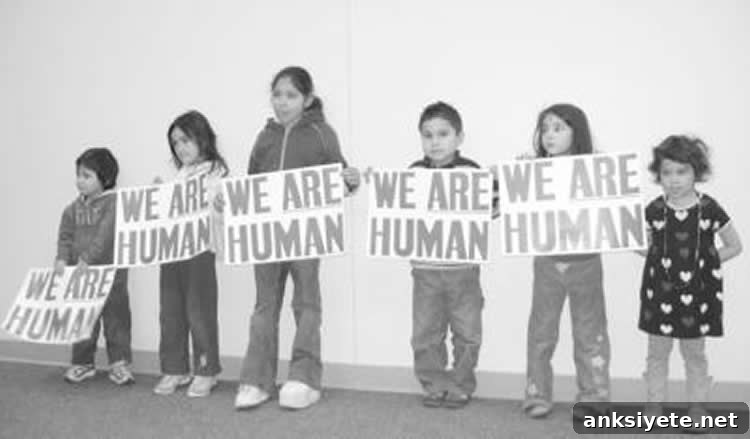
Summary: A new neuroimaging study finds that dehumanization and dislike activate separate brain regions, indicating they are distinct psychological processes.
Source: University of Pennsylvania.
In recent days, the media has shown painful images and sounds: migrant and refugee children confined in steel enclosures, families being separated and crying, buses transporting children in car seats.
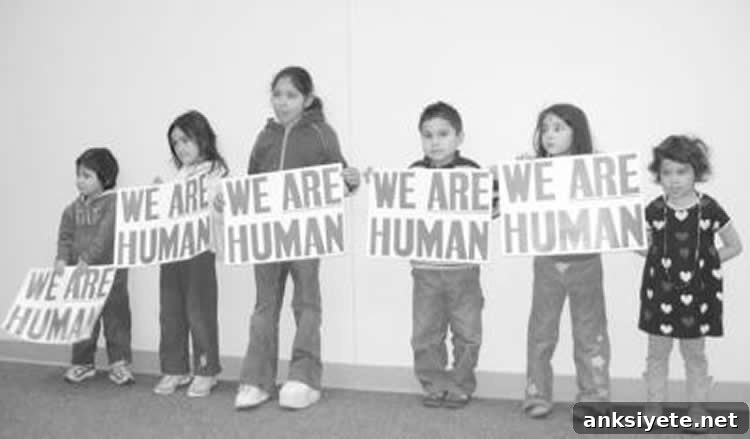
While most Americans oppose family separation at the border, a notable minority do not. For many, the idea that people could accept such policies is baffling. Researchers who study dehumanization observe, however, that it is common for people around the world to judge entire groups—such as Muslims, Indigenous communities, Roma, Africans, or Mexican immigrants—as less than fully human.
For years, psychologists assumed that dehumanizing language—calling people “animals,” “pests,” or similar—was simply an extreme way of expressing dislike. New research published in the Journal of Experimental Psychology challenges that assumption. The study used functional magnetic resonance imaging (fMRI) to show that dehumanization and dislike engage distinct neural systems, suggesting they are separate mental processes.
Consider ordinary examples: many people find puppies or small children lovable while not attributing to them a fully adult human mind; conversely, someone might strongly dislike an arrogant coworker while still seeing that person as fully human. These everyday distinctions helped shape the researchers’ hypothesis that dehumanization and dislike are dissociable.
“When people explicitly dehumanize others, they recruit different neural circuits than when they simply register dislike,” says co-lead author Emile Bruneau, Ph.D., director of the Peace and Conflict Neuroscience Lab at the Annenberg School for Communication, University of Pennsylvania. “Brain regions that respond to judgments about how human a group seems did not respond in the same way when participants rated how much they liked or disliked those groups, and vice versa.”
In the study, Bruneau and colleagues scanned participants’ brains while they evaluated ten targets that varied in perceived social status and category: high-status groups such as Americans, Europeans, and surgeons; lower-status human groups including Muslims, Roma, and people who are homeless; and animals like puppies and rats. Participants completed several ratings: a feeling thermometer to indicate how warmly or coldly they felt toward each target (measuring dislike), and the “Ascent of Man” scale to indicate the extent to which they regarded each as fully human (measuring blatant dehumanization).
Earlier behavioral work by Bruneau and co-lead author Nour Kteily had already shown that blatant dehumanization is often expressed explicitly rather than only implicitly. This neuroimaging study extended that work by isolating the brain regions linked to each judgment. The results revealed a clear double dissociation: areas in the left inferior parietal cortex (IPC) and left inferior frontal cortex (IFC) were parametrically modulated by dehumanization ratings, while a distinct region in the posterior cingulate cortex tracked how much participants liked the targets.
Importantly, dehumanization is not a benign judgment. High levels of dehumanizing beliefs predict harsher and more aggressive outcomes, including greater support for torture, reluctance to aid victims of violence, endorsement of armed conflict, and backing of punitive policies. Recognizing that dehumanization can be separable from ordinary prejudice opens new possibilities for intervention and policy responses.
Bruneau explains that support for policies such as separating migrant children from their parents may not always stem from hatred or conventional prejudice. For some, the rationale is instrumental or paternalistic: if certain groups are viewed as less human or less deserving of moral concern, restrictive measures can be justified as care or protection. “High dehumanization combined with low overt dislike fits a paternalistic mindset,” he says. “Some people may honestly believe that removing children from their parents is a kind of rescue or civilizing intervention.”
For those working to reduce intergroup violence and hostility, these findings matter. Many conflict-reduction efforts focus on increasing mutual liking, but changing personal preferences and feelings can be difficult. Shifting perceptions of humanity—helping people see others as fully human—may be a more attainable and powerful route to reducing harm and opening channels for reconciliation.
By identifying distinct neural signatures for dehumanization and dislike, the study highlights that there are multiple psychological roads to intergroup hostility. Addressing dehumanization specifically could expand and diversify strategies for peacebuilding, policy design, and public education.
“My research aims to reduce intergroup hostility,” Bruneau adds. “Recognizing that dehumanization and dislike operate through different processes is not just theoretically important; it gives us more practical angles to pursue when trying to reduce harm.”
Funding: DRAPER Research Laboratories and Beyond Conflict funded this study.
Source: Julie Sloane – University of Pennsylvania
Publisher: Organized by NeuroscienceNews.com.
Image Source: Image adapted from the University of Pennsylvania news release.
Original Research: Abstract for “Denying humanity: The distinct neural correlates of blatant dehumanization” by Emile Bruneau, Nir Jacoby, Nour Kteily, and Rebecca Saxe in Journal of Experimental Psychology. Published June 25, 2018.
doi: 10.1037/xge0000417
University of Pennsylvania. “In the Brain, Dislike and Dehumanization Are Not the Same Thing.” NeuroscienceNews. 25 June 2018.
Abstract
Denying humanity: The distinct neural correlates of blatant dehumanization
Behavioral evidence shows that some people judge low-status groups as less “evolved and civilized” than high-status groups. This study tests whether blatant dehumanization is merely an extreme form of dislike or a distinct process. Using functional neuroimaging, participants rated ten targets (for example, Europeans, Muslims, rats) on four scales: blatant dehumanization, dislike, perceived dissimilarity, and within-group homogeneity. Neural responses for dehumanization judgments diverged from those associated with the other measures. Specifically, the left inferior parietal cortex (IPC) and left inferior frontal cortex (IFC) were selectively modulated by dehumanization ratings, with the left IFC pattern consistent with animalistic dehumanization (higher responses to low-status human groups and animals, lower responses to high-status human groups). In contrast, a posterior cingulate cortex region parametrically tracked liking. The results demonstrate a double dissociation between brain activity tied to blatant dehumanization and activity tied to dislike.