
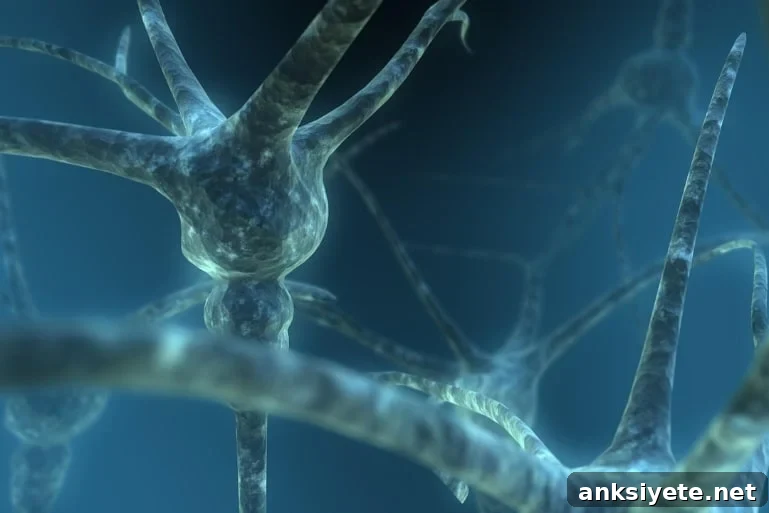
Summary: Researchers have pinpointed a brain pathway that appears to play a central role in the development of alcohol addiction.
Source: University of Warwick
New research by teams from the UK and China has identified a specific neural circuit involved in the emergence of alcohol use disorders. The study, co-led by researchers at the University of Warwick, the University of Cambridge, and Fudan University in Shanghai, highlights how misregulation between two brain regions can drive compulsive and impulsive drinking.
The investigation focuses on the medial orbitofrontal cortex (mOFC), located at the front of the brain, and the dorsal periaqueductal gray (dPAG), a region situated deep in the brainstem. The mOFC evaluates unpleasant or threatening situations and sends that information to the dPAG, which helps determine whether a rapid escape response is needed.
According to the study, two distinct imbalances in this mOFC–dPAG pathway are linked to different drivers of problematic alcohol use:
First, alcohol can suppress activity in the dPAG, reducing the brain’s sensitivity to negative signals and diminishing escape-related responses. When adverse cues are blunted by alcohol, individuals may experience primarily the reward or calming effects of drinking while failing to register the negative consequences, a pattern that can foster compulsive consumption.
Second, some individuals exhibit an overactive dPAG in everyday states, which creates a heightened perception of threat or discomfort. That persistent sense of needing to escape can prompt urgent, impulsive drinking as a fast-acting coping strategy to relieve distress.
Professor Jianfeng Feng, from the Department of Computer Science at the University of Warwick and also affiliated with Fudan University, said that the findings build on previous animal research. “We were invited to evaluate earlier mouse studies that sought the neural origins of alcohol abuse. It is encouraging to reproduce similar patterns in humans and to extend those results by proposing a dual-pathway model that links alcohol misuse to impulsive behaviour,” he commented.
Professor Trevor Robbins of the Department of Psychology at the University of Cambridge added: “It is striking that neural circuits identified in mice for responding to threat and punishment are relevant to adolescent alcohol misuse in humans.”
Dr Tianye Jia, from the Institute of Science and Technology for Brain-inspired Intelligence at Fudan University and affiliated with King’s College London, observed:
“We have found that the same top-down regulation can fail in two very different ways yet produce similar alcohol misuse behaviours.”
The full study appears in the journal Science Advances and reports an international collaboration led by Dr Tianye Jia (Fudan University), Professor Jianfeng Feng (University of Warwick and Fudan University), and Professor Trevor Robbins (University of Cambridge and Fudan University).
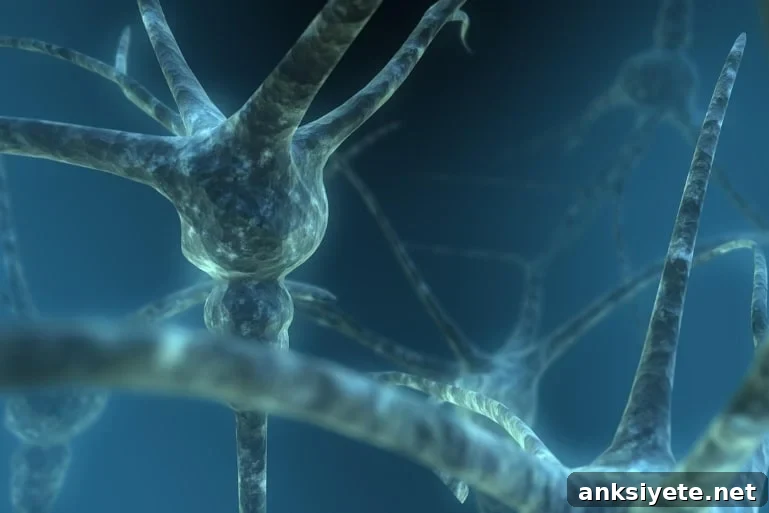
The research team began by noting evidence from rodent models indicating that prefrontal areas and the dPAG may underlie early indicators of alcohol dependence. To test whether these findings translate to humans, they analysed MRI data from the IMAGEN study, a large adolescent cohort drawn from the UK, Germany, France and Ireland. The IMAGEN dataset tracks biological, psychological and environmental influences on brain development and mental health across adolescence.
Participants underwent task-based functional MRI scans. When tasks failed to deliver expected rewards—creating feelings akin to punishment—the regulatory interaction between the mOFC and dPAG was more strongly inhibited in participants who had shown signs of alcohol misuse. Conversely, in resting-state scans, individuals with an overexcited mOFC–dPAG pathway tended to report higher levels of alcohol-related problems, consistent with an urgent need to escape perceived threats.
Alcohol use disorder (AUD) is a major global public health concern. As noted by international health reports, harmful alcohol use contributes substantially to illness and premature death worldwide. By clarifying the neural mechanisms that predispose some people to compulsive or impulsive drinking, this research aims to inform more effective prevention and treatment strategies tailored to how brain circuits regulate threat, punishment and reward.
About this research
Source: University of Warwick
Contact: Alice Scott – University of Warwick
Image: The image is in the public domain
Original Research: The study is published in Science Advances