
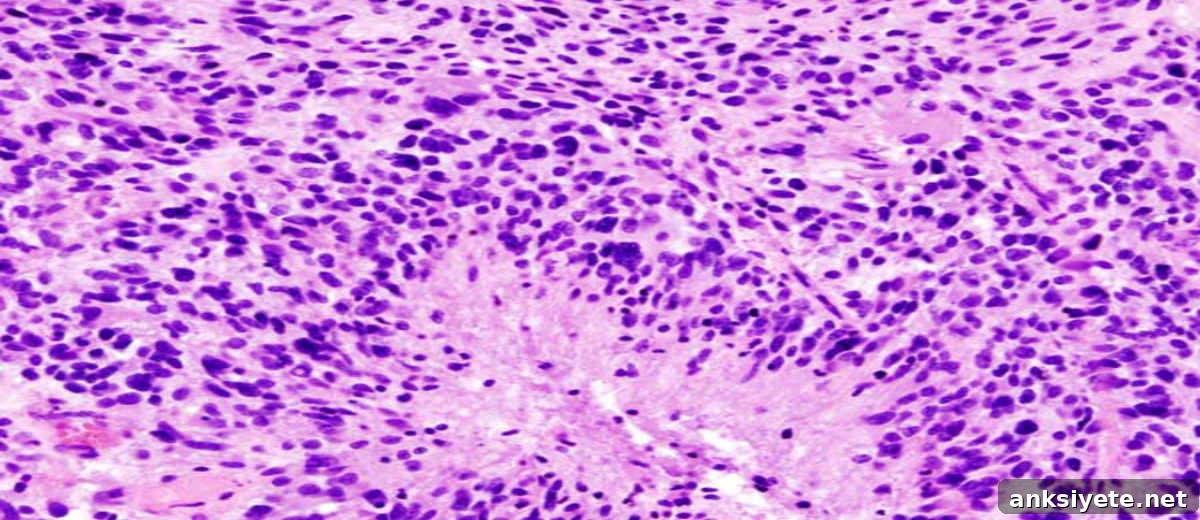
Researchers identify mda-9/syntenin as a promising therapeutic target in glioblastoma
A new study offers hope for targeted therapies against glioblastoma multiforme (GBM), the most common and aggressive primary brain tumor. For the first time, investigators have shown that the gene melanoma differentiation associated gene-9, also known as mda-9/syntenin, plays a central role in GBM’s invasive behavior and disease progression.
Published in Neuro‑Oncology, the study was led by researchers at Virginia Commonwealth University Massey Cancer Center and the VCU Institute of Molecular Medicine (VIMM). Using a combination of laboratory cell models, animal experiments and publicly available cancer genomic databases, the team mapped how mda-9/syntenin contributes to tumor growth, invasion and poor patient outcomes.
Bioinformatic analysis and examination of human GBM tissue samples showed that higher expression of mda-9/syntenin is associated with more advanced tumors and reduced survival, suggesting the gene is a marker of aggressive disease. In laboratory experiments, overexpression of mda-9/syntenin increased cancer cell invasion into healthy brain tissue, while blocking its expression in animal models limited invasion, reduced tumor size and impaired cell migration.
Mechanistically, the researchers demonstrated that mda-9/syntenin regulates processes that support tumor progression. Suppression of mda-9/syntenin lowered production and secretion of interleukin-8 (IL-8), a signaling protein known to promote cancer cell migration and angiogenesis (formation of new blood vessels that feed tumors). The study also identified that mda-9/syntenin engages with a large network of cancer-related proteins—an estimated 151 partners—through its PDZ domains, short amino-acid motifs that mediate protein–protein interactions and cellular signaling.
“This study represents a major advance in our understanding of what drives GBM,” said lead author Paul B. Fisher, M.Ph., Ph.D., Thelma Newmeyer Corman Endowed Chair in Cancer Research and co-leader of the Cancer Molecular Genetics research program at VCU Massey Cancer Center, chairman of the Department of Human and Molecular Genetics at VCU School of Medicine and director of VIMM. “Because mda‑9/syntenin levels increase in advanced disease, we may be able to use this gene both to monitor tumor progression and to evaluate therapeutic responses.”
Fisher originally discovered mda‑9/syntenin and has shown through bioinformatics that the gene is overexpressed in many cancer types. The current findings highlight specific molecular interactions and signaling pathways that could be exploited to develop new, targeted GBM treatments.
Based on these results, the research team is now pursuing the development of small molecules that block the interaction between mda‑9/syntenin and specific cancer-promoting proteins via the PDZ domains. If successful, such PDZ-targeted inhibitors could provide a novel therapeutic strategy to reduce tumor invasion, limit angiogenesis and improve patient outcomes in GBM.
Notes about this brain cancer research
This work involved a multidisciplinary team including Timothy P. Kegelman (graduate student, M.D./Ph.D. program, VCU School of Medicine), Manny Bacolod, Ph.D.; Bin Hu, Ph.D.; Devanand Sarkar, M.B.B.S., Ph.D.; Swadesh K. Das, Ph.D.; Luni Emdad, M.B.B.S., Ph.D.; Santanu Dasgupta, Ph.D.; Mitchell E. Menezes, Ph.D.; Christine E. Fuller, M.D.; Paul Dent, Ph.D.; Albert S. Baldwin, Ph.D.; Jeffrey N. Bruce, M.D.; and Maurizio Pellecchia, Ph.D. The collaborative effort spans departments of human and molecular genetics, neuropathology, neurosurgery and cancer therapeutics across VCU and partner institutions.
The study received support from the National Institutes of Health (grant R01 CA134721), the National Foundation for Cancer Research, the Goldhirsh Foundation for Brain Tumor Research, the Dana Foundation and, in part, VCU Massey Cancer Center’s NIH‑NCI Cancer Center Support Grant P30 CA016059.
Contact: John Wallace – Virginia Commonwealth University
Source: Virginia Commonwealth University press release
Image Source: Image credited to KGH, licensed Creative Commons Attribution-Share Alike 3.0 Unported (credit retained in caption)
Original Research: “MDA-9/syntenin is a key regulator of glioma pathogenesis” by Timothy P. Kegelman et al., published in Neuro‑Oncology. Published online December 4, 2013. doi:10.1093/neuonc/not157
Keywords: glioblastoma, GBM, mda-9/syntenin, PDZ domains, IL-8, angiogenesis, targeted therapy, brain cancer research, Virginia Commonwealth University, VCU Massey Cancer Center