
Summary: A new study challenges previous assumptions about how Parkinson’s disease develops and progresses.
Source: University of Basel
Researchers at the University of Basel have published findings that call into question a widely held theory about the molecular origins of Parkinson’s disease.
Parkinson’s disease is a progressive neurodegenerative disorder first described more than 200 years ago. Clinically, it is characterized by symptoms such as tremor, muscle rigidity, slowness of movement and, in many patients, declining cognitive ability. The disease affects millions of people worldwide and is associated with the gradual loss of dopamine-producing neurons in specific brain regions. Despite decades of research, the precise molecular mechanisms that initiate and drive neuronal loss remain unclear.
Reexamining the role of alpha-synuclein fibrils
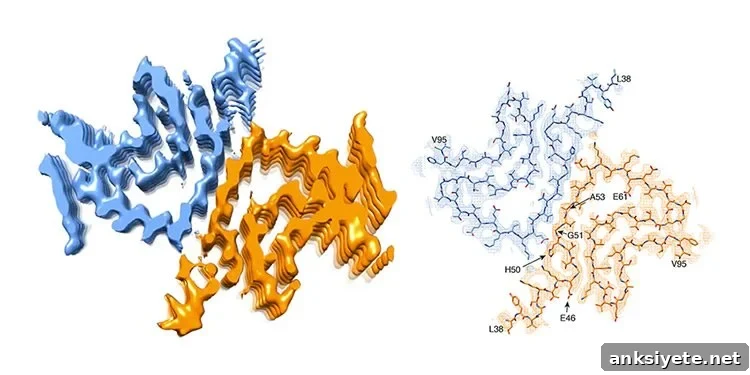
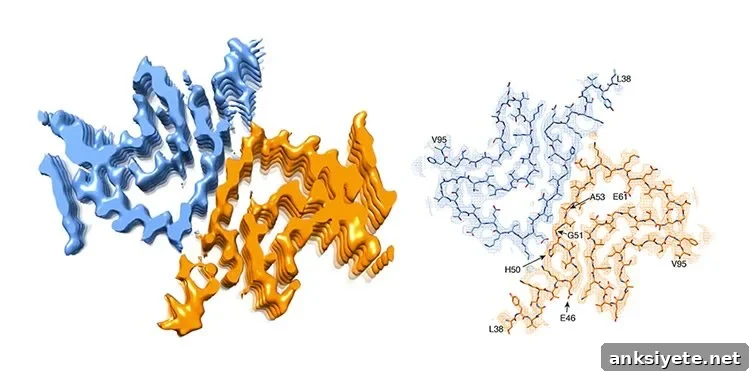
Alpha-synuclein, a small neuronal protein, has long been implicated in Parkinson’s disease. Under certain conditions it can misfold and assemble into long, needle-like protein fibrils that aggregate into intracellular inclusions known as Lewy bodies. These aggregates have been considered toxic to neurons and a central feature of disease pathology. In a collaborative study led by Prof. Henning Stahlberg at the Biozentrum of the University of Basel, together with researchers from Hoffmann-La Roche Ltd. and ETH Zurich, scientists generated alpha-synuclein fibrils in the laboratory and resolved their three-dimensional structure at atomic resolution using cryo-electron microscopy (cryo-EM).
Unexpectedly, the high-resolution structure obtained by the team raises new questions about the relationship between fibril structure and disease. The reconstructed fibril shows a defined architecture formed by two interacting protofilaments and reveals details of the backbone and side-chain arrangements within the fibril core. What surprised the researchers was how this specific fibril structure interacts with known genetic mutations associated with familial Parkinson’s disease.
Genetic mutations and structural paradoxes
Some inherited forms of Parkinson’s disease are linked to mutations in the alpha-synuclein gene. It has been proposed that these mutations promote misfolding and fibril formation, thereby increasing the formation of toxic aggregates. However, the new cryo-EM structure indicates that several familial mutation sites lie at positions that would interfere with the fibril architecture observed in this study. In other words, the mutations would be expected to destabilize the particular fibril form the team characterized, rather than promote it.
This apparent contradiction suggests that the relationship between alpha-synuclein aggregation and Parkinson’s disease is more complex than previously thought. If the fibril structure described in this study were the primary toxic species responsible for disease, certain inherited mutations would paradoxically be protective — yet clinical evidence shows these mutations increase disease risk. Therefore, it is possible that other fibril polymorphs, different aggregate conformations, or alternative pathological mechanisms are responsible for neuronal damage in patients carrying these mutations.
Open questions and implications for research and therapy
The study underscores several key unanswered questions. Do the known familial mutations drive the formation of structurally distinct alpha-synuclein aggregates? How do different fibril conformations affect neuronal physiology and survival? What is the normal biological function of alpha-synuclein in healthy neurons, and how is that function disrupted during disease? Addressing these questions will be essential for clarifying how aggregates contribute to neuronal death and for guiding development of targeted therapies.
Current treatments for Parkinson’s disease address symptoms, primarily by compensating for the loss of dopamine, but they do not halt or reverse the underlying neurodegeneration. Structural information about alpha-synuclein fibrils — including the hydrophobic clefts and interfaces identified in this study — could inform rational design of diagnostic agents or molecules that bind and modulate specific fibril forms. However, the new findings caution that therapeutic strategies must account for potential structural diversity among aggregates.
Source: University of Basel
Publisher: NeuroscienceNews.com (organized presentation)
Image Source: Image credited to the researchers.
Original Research: Cryo-EM structure of alpha-synuclein fibrils, published in eLife, July 3, 2018. The study reports a 3.4 Å resolution cryo-EM reconstruction of alpha-synuclein fibrils formed by residues 1–121 and discusses the fibril core, protofilament interface and implications for synucleinopathies.
University of Basel. “Study Raises Doubts on a Previous Theory of Parkinson’s.” NeuroscienceNews, July 6, 2018.
Abstract
Cryo-EM structure of alpha-synuclein fibrils
Parkinson’s disease is a progressive neuropathological disorder that belongs to the class of synucleinopathies, in which the protein alpha-synuclein is found at abnormally high concentrations in affected neurons. Its hallmark are intracellular inclusions called Lewy bodies and Lewy neurites. The study reports the structure of cytotoxic alpha-synuclein fibrils (residues 1–121), determined by cryo-electron microscopy at a resolution of 3.4 Å. Two protofilaments form a polar fibril composed of staggered β-strands. The backbone of residues 38 to 95, including the fibril core and the non-amyloid component region, are well resolved in the EM map. Residues 50–57, which include three mutation sites associated with familial synucleinopathies, form the interface between the two protofilaments and contribute to fibril stability. A hydrophobic cleft at one end of the fibril may have implications for fibril elongation and for the design of molecules for diagnosis and treatment of synucleinopathies.