
Researchers confirm the true identities of the preserved brains of mathematician Carl Friedrich Gauss and physician Conrad Heinrich Fuchs
Two brain specimens preserved for more than 150 years and stored in the University Medical Center Göttingen collection — long believed to belong respectively to the celebrated mathematician Carl Friedrich Gauss and to Göttingen physician and anatomical-pathology pioneer Conrad Heinrich Fuchs — were in fact swapped. Neuroscientist Renate Schweizer of Biomedizinische NMR Forschungs GmbH at the Max Planck Institute for Biophysical Chemistry reached this conclusion after re-examining the historic specimens with modern magnetic resonance imaging and reviewing contemporary documentation. Her work reassigns each brain to its correct owner and clarifies a mix-up that likely occurred soon after both men died in 1855.
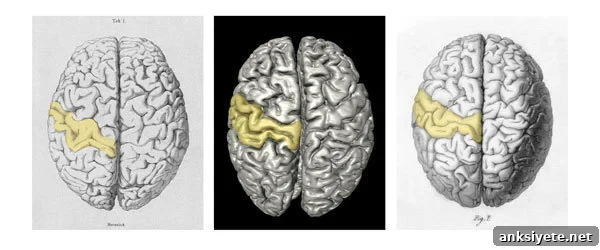
In the MRI suite, walnut-like folds gradually emerged on the screen as slices of cortical tissue were rendered in high resolution. Schweizer first inspected a 150-year-old slice believed to be Gauss’s brain and then scanned the other specimen attributed to Fuchs. Her target was a distinctive anatomical feature: an uncommon division of the central sulcus (central fissure), a variation present in fewer than one percent of people. The gyri bordering this fissure contain the brain regions that process touch and control movement, and a visible division of the central fissure — while usually clinically insignificant — is an identifiable anatomical marker.
Schweizer’s MRI scans matched Wagner’s nineteenth-century illustrations, but not in the way she initially expected. Rudolf Wagner, an anatomist and friend of Gauss, had documented the brains of both men in publications from 1860 and 1862, producing lithographs and copperplate images based on his preparations. Schweizer found that the historic drawing showing the divided central fissure corresponds precisely to the specimen that had been catalogued as Gauss’s brain in the modern collection — yet the MRI evidence and Wagner’s illustrations revealed that the specimen with the rare sulcal division is actually Fuchs’s brain. Examination of the collection confirmed that the jars were mislabeled: the brain originally taken from Gauss was stored in a jar labeled “C. H. Fuchs,” while Fuchs’s brain sat in a jar marked “C. F. G__ss.”
Schweizer’s working hypothesis is that the swap occurred relatively early, likely during or shortly after Wagner’s examinations when cortical surfaces were being measured again. Because no further comparative analyses of the two brains were carried out for many decades, the mislabeling went unnoticed until the recent MRI-based reassessment. The correction is important not only for historical accuracy but also for the institutions and scholarly societies associated with Gauss and the Göttingen anatomical collection. Axel Wittmann of the Gauss Society provided key historical expertise that helped confirm the century-old error.
This study underscores the scientific value of historical anatomical collections and the benefit of applying modern imaging methods to archival specimens. The brains, preserved in alcohol and still in excellent condition, could be scanned noninvasively and documented in detail. All images and photographic records from the project are being digitally archived to preserve these specimens as long-term research assets. Schweizer continues to use the MRI data to study the divided central sulcus in the now-correctly identified Fuchs brain, examining the variation both on the cortical surface and within deeper structures.
Specialists also verified that earlier descriptions of Gauss’s brain — which characterized it as anatomically unremarkable — remain valid. Walter Schulz-Schaeffer, head of the Prion and Dementia Research Unit at University Medical Center Göttingen, reviewed the new MRI scans and confirmed that Gauss’s brain shows normal age-related changes for an individual who lived to 78, with features such as basal ganglia alterations consistent with long-standing high blood pressure. Overall, both brains are similar in size and weight and are largely unremarkable anatomically.
Interdisciplinary teams of neuropathologists and MRI scientists are now studying how decades or centuries of alcohol storage alter brain tissue and how MRI protocols can be adapted to improve interpretation of archived specimens. These methodological advances will help researchers extract reliable anatomical and historical information from preserved brains without damaging the material.
The two historic brains have been relabeled and returned to the university collection, where they will remain accessible for future study — now correctly identified and documented for generations to come.
Notes about this neuroimaging research
Contact: Dr. Carmen Rotte – Max Planck Institute
Source: Max Planck Institute press release
Image Source: The first image is credited to Jens Frahm and Sabine Hofer / Biomedizinische NMR Forschungs GmbH. The second image is credited to Böttcher-Gajewski / MPI for Biophysical Chemistry. Both images are adapted from the Max Planck Institute press release.
Original Research: Abstract for “A rare anatomical variation newly identifies the brains of C.F. Gauss and C.H. Fuchs in a collection at the University of Göttingen” by Renate Schweizer, Axel Wittmann, and Jens Frahm in Brain. Published online October 26 2013 doi:10.1093/brain/awt296
#brain, #neuroimaging, #MRI