
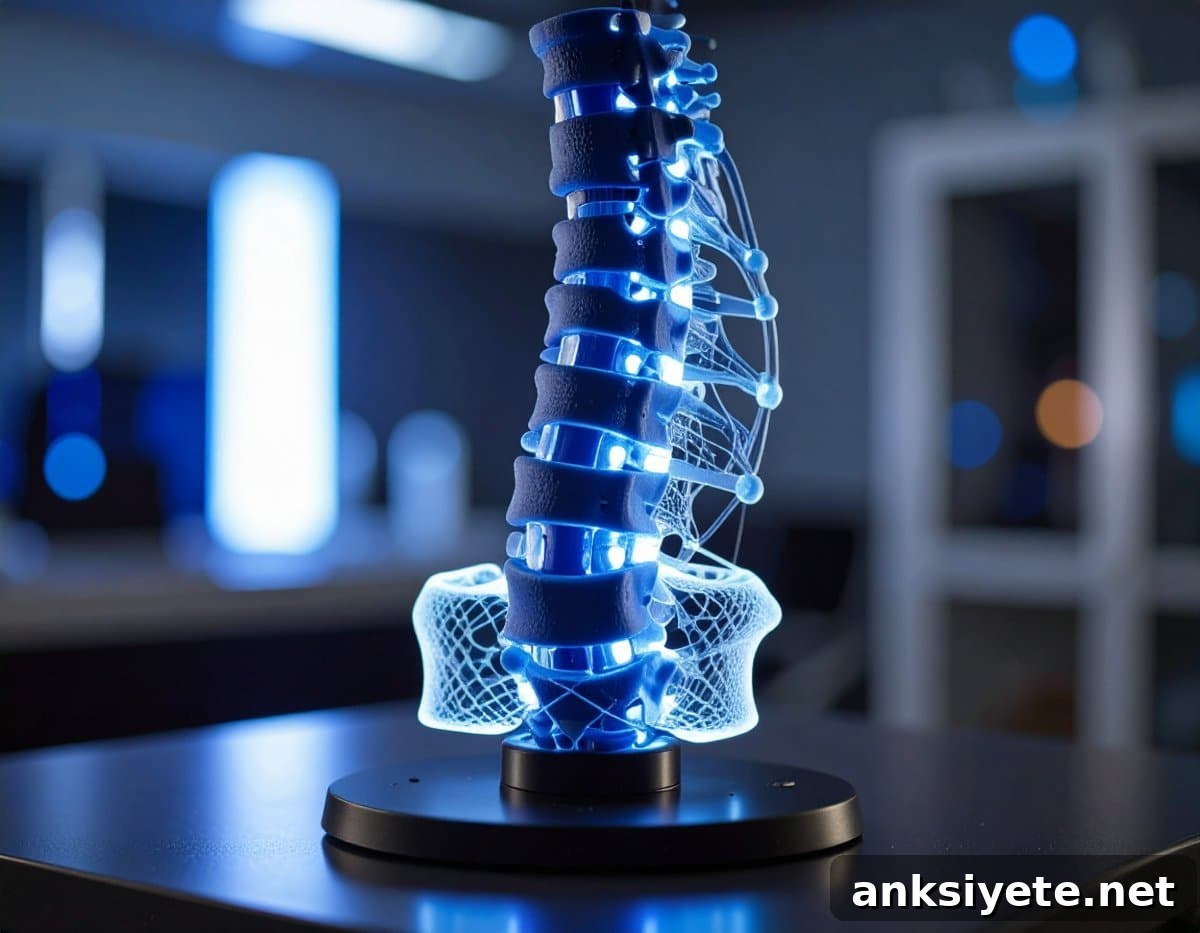
Summary: Researchers at RCSI University of Medicine and Health Sciences have created a 3D-printed implant that delivers focused electrical stimulation to injured spinal cord tissue, encouraging nerve regeneration. The soft, biomimetic device contains a fine, electrically conductive mesh that mimics the spinal cord’s architecture and, in laboratory tests, improved growth of neurons and stem cells.
By tailoring the implant’s fibre pattern and density, the team increased its capacity to direct electrical signals and promote repair. Developed through collaboration between engineers, clinicians and people with lived experience of spinal injury, this technology could reshape treatments for spinal cord trauma and other conditions where electrical signalling supports healing.
Key facts:
- 3D-printed implant designed to stimulate nerve repair with targeted electrical signals.
- Incorporates conductive MXene nanomaterials and customizable fibre geometries to enhance neurite outgrowth and neuronal differentiation.
- Potential applications extend to cardiac, orthopaedic and neurological therapies where electrical stimulation aids tissue repair.
Source: RCSI
Overview of the research
A research team at RCSI’s Tissue Engineering Research Group (TERG) and the AMBER Research Centre has engineered a 3D-printed, electrically conductive implant that can be integrated into injured spinal cord tissue to facilitate neural repair. The device and its laboratory performance are described in the journal Advanced Science.
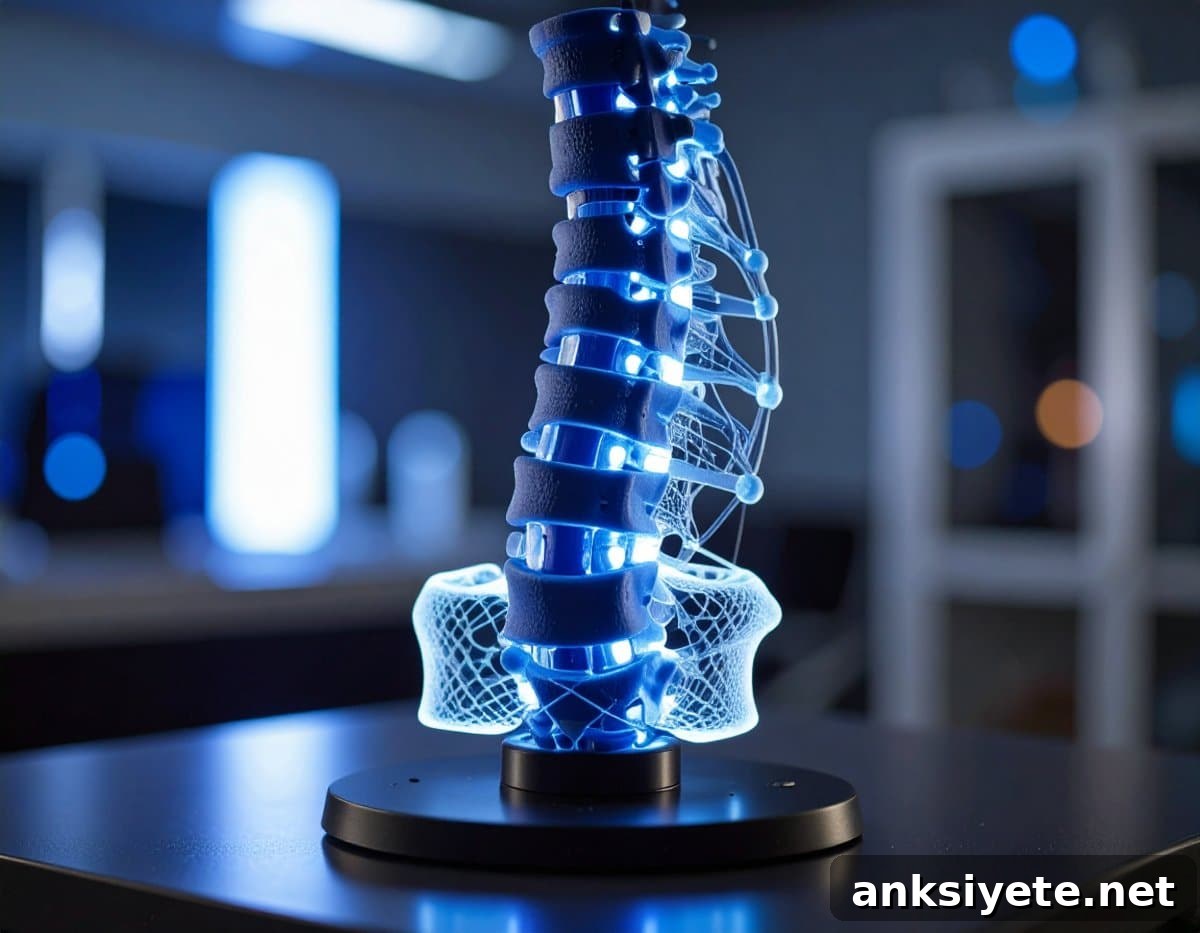
Spinal cord injury can cause paralysis, loss of sensation and chronic pain. In Ireland alone, more than 2,300 people and families are living with spinal cord injuries, and currently there is no definitive therapy that reliably repairs the damaged central nervous system. Recent evidence, however, indicates that therapeutic electrical stimulation across an injury site can encourage nerve cells to regrow.
Professor Fergal O’Brien, Deputy Vice Chancellor for Research and Innovation and Professor of Bioengineering and Regenerative Medicine at RCSI, explains: “Promoting the regrowth of neurons after spinal cord injury has been historically difficult. Our group is developing electrically conductive biomaterials that can channel electrical stimulation across the injury and support the body’s own repair processes.” He notes that the collaborative environment at the AMBER Centre—bringing together biomedical engineers, biologists and materials scientists—creates the conditions for this kind of disruptive innovation.
The implant combines ultra-thin, electroconductive nanomaterials provided by Professor Valeria Nicolosi’s laboratory with a soft, hyaluronic acid–based extracellular matrix (ECM). The research team used melt-electrowriting to 3D-print highly organised polycaprolactone (PCL) micro-meshes with controlled fibre spacings and then functionalised those meshes with MXene nanosheets to impart tunable electrical conductivity.
The resulting MXene-ECM composite scaffold reproduces key features of spinal cord architecture and supports cell growth while transmitting electrical cues. In cell studies, electrical stimulation applied through these micro-meshes enhanced neurite extension and influenced neuronal differentiation. Importantly, the density and pattern of the micro-mesh fibres affected outcomes: high-density micro-meshes produced stronger responses in multicellular neurosphere models than lower-density designs or MXene-free controls.
Dr Ian Woods, Research Fellow at TERG and first author of the study, highlights the platform’s flexibility: “These 3D-printed materials allow us to tune electrical stimulation to guide regrowth and may enable a new generation of medical devices for traumatic spinal cord injuries.” He also emphasises broader potential: similar electroconductive scaffolds could support healing in cardiac, orthopaedic and other neurological applications where electrical signalling drives recovery.
The project engaged a stakeholder advisory panel, coordinated with the Irish Rugby Football Union Charitable Trust (IRFU-CT), that included clinicians, neuroscientists, researchers and people with serious spinal injuries. The panel helped refine research priorities and ensured the team remained aligned with the real-world needs and lived experiences of those affected by spinal cord injury.
Funding: The study received support from the Irish Rugby Football Union Charitable Trust, AMBER (the Research Ireland Centre for Advanced Materials and BioEngineering Research) and an Irish Research Council Government of Ireland Postdoctoral Fellowship.
About this SCI and neurotech research news
Author: Laura Anderson
Source: RCSI
Contact: Laura Anderson – RCSI
Image: Image credit: Neuroscience News
Original research (open access): “3D-Printing of Electroconductive MXene-based Micro-meshes in a Biomimetic Hyaluronic Acid-based Scaffold Directs and Enhances Electrical Stimulation for Neural Repair Applications” by Ian Woods et al., Advanced Science. DOI: 10.1002/advs.202503454
Abstract (concise summary)
There are currently no widely effective treatments for central nervous system neurotrauma, but electrical stimulation shows promise for supporting neural repair. This study tests the hypothesis that embedding spatially organised, electroconductive materials within a biomimetic scaffold can enhance electrically driven regenerative signalling.
Researchers synthesised electroconductive Ti3C2Tx MXene nanosheets and demonstrated their compatibility with neurons, astrocytes and microglia. Using melt-electrowriting, they printed organised PCL micro-meshes with low, medium and high fibre density and functionalised these with MXenes to provide a wide range of tunable conductivity.
Embedding the conductive micro-meshes within a neurotrophic, immunomodulatory hyaluronic acid-based ECM produced a soft, growth-supportive MXene-ECM composite. Neurons and multicellular neurospheres stimulated on these scaffolds showed increased neurite outgrowth, axonal extension and neuronal differentiation, effects that depended on the micro-mesh fibre spacing. The findings indicate that spatial organisation of electroconductive materials in a neurotrophic scaffold can amplify reparative responses to electrical stimulation and present a promising strategy for neurotrauma repair.